Blogs

Financial Literacy for Kids: Why Age 7 Might Already Be Too Late

Financial Literacy for Kids: Why Age 7 Might Already Be Too Late

Most parents think financial literacy for kids starts with a first allowance, a piggy bank, or maybe a lesson around the time their child gets a debit card. The research says otherwise. By the time most parents feel “ready” to start the money conversation, a lot of the groundwork has already been laid — for better or worse.

Financial literacy for kids begins much earlier than most parents think. A review of child development research by behavioural scientists David Whitebread and Sue Bingham for the Money Advice Service concluded that many of the cognitive and self-regulation skills supporting financial behaviour are established by around age seven.

That means teaching kids about money isn’t something to postpone until they receive pocket money or open their first bank account. Instead, parents can begin building healthy money habits in children through everyday conversations, choices, and routines from the preschool years onward.

Key Takeaways

  • ✅ Financial literacy for kids begins long before children earn money.
  • ✅ Research suggests many money habits form by around age 7.
  • ✅ Parents teach money values every day through conversations and behaviour.
  • ✅ Delayed gratification is a skill that can be practised.
  • ✅ Small everyday choices build lifelong financial confidence.

👉 Skip to the end and download the GrowUpWise Financial Literacy Starter Kit 

Why Financial Literacy for Kids Starts Before the First Allowance

In 2013, behavioural scientists David Whitebread and Sue Bingham at the University of Cambridge reviewed the existing research on how children develop the cognitive and self-regulatory skills that underpin money habits — things like impulse control, working memory, and the ability to apply rules of money management. Their report concluded that these foundations are typically in place by around age seven. When it comes to financial literacy, age 7 is a critical window, well before most kids earn or manage money independently.

That’s worth going deeper with. Financial skills for children aren’t something that switches on in the teenage years when a bank account shows up. The mental scaffolding and money mindset — around patience, planning, and understanding consequences (that a choice today affects options tomorrow) — is being built while children are still learning to tie their shoelaces.

Children learn about money through their surroundings: advertisements, friends, neighbours, and family conversations (verbal as well as non-verbal).

What the latest research means for us parents: around age 7, when kids start to understand logic and develop internal processing, it is “the window” to start shaping healthy habits and provide an opportunity to form a healthy money mindset and foundational beliefs around saving, spending, and value for our children.

Definition: Financial literacy for kids refers to helping children understand how money works, how to make thoughtful spending decisions, how to save, delay gratification, and appreciate value. At younger ages, this is less about calculations and more about building lifelong money habits.

Financial Literacy for Kids Is About Decision-Making, Not Math

Here’s where most financial education for children efforts miss the point: they focus on arithmetic. Interest rates. Percentages. Budgeting spreadsheets. But a seven-year-old doesn’t need to compute compound interest to build a healthy relationship with money.

What they need is practice with the decision underneath the math:

  • Pausing before spending.
  • Weighing “want” against “need”.
  • Practicing delayed gratification — the discomfort of not getting something immediately for a better reward later.
  • Learning from a bad choice without being shamed for it.

These are decision-making and emotional-regulation skills first, financial skills second. This is also why financial literacy for kids works best when it’s not siloed as a “money lesson”. It overlaps directly with the same executive-function and self-regulation skills children need for focus, friendships, and frustration tolerance in general. It is more of a behavioural science, rather than maths expertise.

The “I’ll Teach Them When They Start Earning” Myth

It’s one of the most common and most costly parenting assumptions: that money conversations can wait until a child has actual money to manage.

By the time a child earns their first rupee, they’ve already absorbed years of implicit lessons about spending, saving, and value — from how the household talks about money, what gets bought without discussion, what triggers an argument, and what gets treated as a splurge. Waiting for a paycheck to start teaching kids about money means the child’s operating beliefs are already largely formed; you’re now editing, not building from scratch.

Your Child Is Already Learning About Money — The Question Is from Whom

Teaching children about money isn’t optional. Learning is happening constantly. Children absorb money lessons from:

  • Advertising (increasingly algorithmic and targeted, even to kids)
  • Friends and classroom social dynamics
  • Social media influencers and unboxing culture
  • Overheard family conversations and unspoken financial stress

The only real choice a parent has is whether that learning happens intentionally, through conversations you actually curate, or by accident, shaped by whichever source got there first. If you don’t teach it on purpose, someone — or something — else will.

What the Marshmallow Test Teaches Us About Delayed Gratification in Kids

Child learning delayed gratification and healthy money habits.

If there’s one psychological finding that keeps showing up in conversations about healthy financial habits, it’s the Stanford “Marshmallow Test.” Conducted by psychologist Walter Mischel at Stanford in 1970, the experiment offered children a choice between one small reward immediately, or a larger reward if they could wait. Follow-up research linked children who waited longer to better outcomes later in life, including academic performance and other measures of wellbeing.

This is usually where the story stops in most parenting content — but the fuller picture is more interesting and more useful. A 2018 replication of the original work, published in Psychological Science, tested the same idea on a larger and more socioeconomically diverse sample. The replication found a correlation about half the size of the original study once researchers controlled for family background, early cognitive ability, and home environment.

What this actually tells parents: when fostering delayed gratification, kids need to know it is a trainable skill, not a fixed trait they either have or lack by age five. It’s a skill embedded in context. Children delay gratification more successfully when their environment has taught them that waiting is reliably rewarded — which is itself a parenting-shaped variable, not just a personality trait. That’s actually good news: it means the environment you build at home has real influence here.

5 Common Mistakes Parents Make When Teaching Kids About Money

Here are the most common mistakes that parents make for their children’s money education.

  1. Waiting until children receive pocket money.
  2. Treating money as a taboo subject.
  3. Solving every financial problem for children.
  4. Focusing only on saving instead of decision-making.
  5. Using money only as a reward or punishment.

How Parents Can Build Financial Literacy for Kids at Home

Everyday family conversations shape children’s attitudes toward money. None of this requires a curriculum overhaul. Small, repeated, age-appropriate moments do more than occasional formal “money lessons.”

  • For younger children (roughly ages 5–8)

Keep it concrete and story-driven. Use physical coins and notes, not just apps. Narrate real decisions out loud: “We have ₹200 for snacks today — do we want two small things or one bigger thing?” Let them experience small trade-offs with low stakes.

  • For older children (roughly ages 9–12)

Introduce real choice with real consequences. Let them manage a small, fixed amount for a defined period, and let them make (and live with) a bad call. Talk about advertising and social pressure directly — kids at this age can genuinely understand persuasion tactics once they’re named.

Across ages

  • Turn “no” into “let’s plan for it” — reframes denial as a delayed reward instead of a restriction.
  • Narrate your own financial decisions in age-appropriate language, so money stops being a silent, mysterious adult-only topic.
  • Praise the process of choosing well, not just the outcome — this builds the decision-making muscle, not just compliance.
  • Help them understand the value of money. Encourage them to create their own value through age-appropriate problem-solving.
  • Read age-appropriate books that introduce the concepts of money to children through engaging stories so that lessons stick.

Financial Literacy Looks Different at Every Age

Age Focus
3–5 Needs vs wants, waiting, sharing
5–7 Saving, simple choices, value
7–10 Budgeting, goals, delayed gratification
10–12 Advertising, trade-offs, opportunity cost
Teens Banking, investing, digital payments
Every shopping trip, birthday gift, or discussion about saving is an opportunity to build lifelong money habits. Start with one small conversation this week.
Family teaching financial literacy for kids during everyday shopping decisions.

If you’d like a structured, research-backed approach, download the free GrowUpWise Financial Literacy Starter Kit and begin building financial confidence together.

Frequently Asked Questions

At what age should financial literacy for kids begin?

Research suggests the cognitive foundations for financial decision-making are largely in place by around age 7, which means informal money conversations can meaningfully start well before that – even as early as ages 4–5, through simple choice and delay exercises.

Is financial literacy for kids really a math subject?

Not primarily. The core skills are decision-making, delayed gratification, and understanding needs versus wants. Arithmetic (budgeting, interest, percentages) matters, but it’s built on top of these behavioural foundations, not instead of them.

Does the “Marshmallow Test” mean a child’s self-control is fixed for life?

No. Later replications show the effect is real but smaller than originally reported, and strongly shaped by environment and consistency. Delayed gratification is a trainable skill, not a fixed trait.

What’s the single highest-leverage thing a parent can do?

Make money conversations a normal, ongoing part of household life instead of a one-time lesson — narrate real decisions and explain the reasoning behind it, let children make small low-stakes choices, and resist the urge to shield them from every financial trade-off.

Start the Conversation Today

Financial literacy for kids isn’t about raising children who are obsessed with money. It’s about raising adults capable of making calm, thoughtful decisions with money- because they got the practice young, in small, low-stakes ways, with a parent narrating the “why” along the way.

Want a simple way to start this week?


References
Whitebread, D., & Bingham, S. (2013). Habit Formation and Learning in Young Children. London: Money Advice Service.
Mischel, W., & Ebbesen, E. B. (1970). Attention in delay of gratification. Journal of Personality and Social Psychology, 16(2), 329–337.
Watts, T. W., Duncan, G. J., & Quan, H. (2018). Revisiting the Marshmallow Test: A Conceptual Replication Investigating Links Between Early Delay of Gratification and Later Outcomes. Psychological Science, 29(7), 1159–1177.

Written by Anshula Verma

Most Children Are Taught to Answer Questions. Very Few Are Taught to Think Through Them.

Most Children Are Taught to Answer Questions. Very Few Are Taught to Think Through Them.

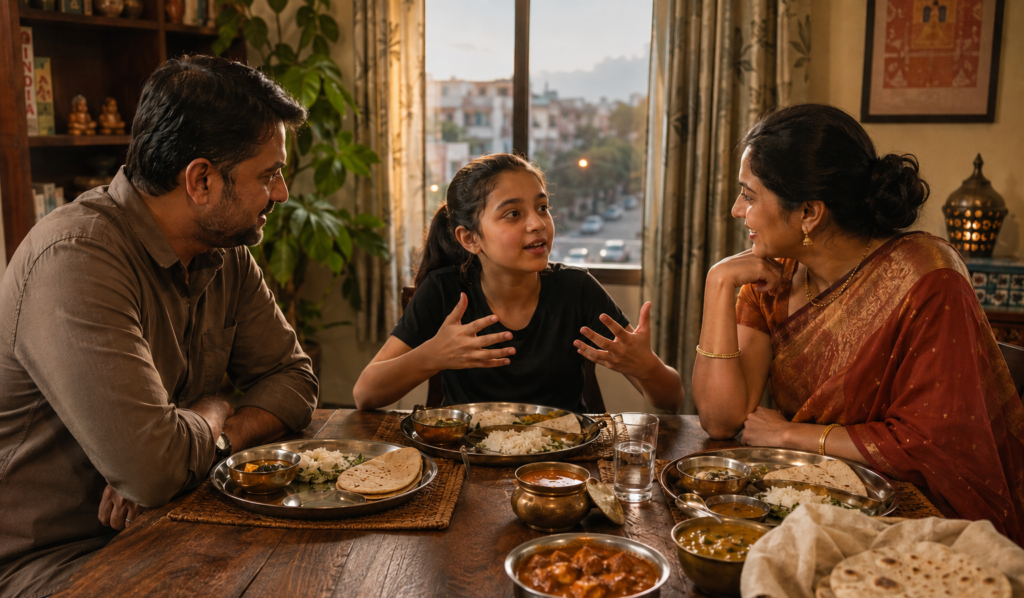
At dinner tables across the world, a familiar ritual takes place. Parents ask the standard questions:

  • “How was school?”
  • “What did you learn today?”
  • “Did you finish your homework?”

And most children learn very quickly how to respond:

  • “Fine.”
  • “Nothing.”
  • “Yes.”

The conversation ends there. But beneath these one-word answers, something much deeper is often being missed.

Many children are learning how to answer questions without actually learning how to think through them.

Understanding the Articulation Gap in Children

There is a distinct difference between memorizing information and expressing an original thought. When children aren’t challenged to stretch their verbal intelligence, they struggle to:

  • Structure their thoughts logically.
  • Explain the “why” behind their thinking.
  • Defend an idea when challenged.
  • Explore different viewpoints and perspectives.
  • Articulate reasoning clearly and confidently.

Over time, this gap quietly becomes visible.

Teachers are usually the first to notice it, noting on report cards:

  • “Knows the answer but hesitates,”
  • “Could participate more,” or
  • “Expression needs work.”

Later in life, this gap widens. It shows up during university interviews, group discussions, workplace presentations, leadership opportunities, and even in their friendships and social confidence.

At GrowUpWise, we call this the Articulation Gap—the disconnect between what a child understands internally and what they can express clearly to another person.

The Good News: Communication is not an innate trait; it is a teachable skill. It doesn’t require forcing a naturally quiet child to be loud, nor does it require rote memorization. It happens through regular, thoughtful conversation.

The Real Goal Is Not “Talking More”

Many parents assume that strong communication and public speaking skills mean speaking loudly, being outgoing, or constantly dominating a conversation.

But real verbal intelligence is much deeper than that. True communication involves:

  1. Organizing thoughts clearly before speaking.
  2. Giving reasons, not just emotional opinions.
  3. Listening actively and carefully.
  4. Considering alternative viewpoints.
  5. Explaining complex ideas simply.

Surprisingly, one of the best places to build these lifelong habits is right at the dinner table.

One Simple Question That Reveals a Lot

If you want to test your child’s articulation and critical thinking skills, try asking this simple question tonight:

“What’s something you changed your mind about recently?”

At first, many children will struggle to answer. This isn’t because they lack intelligence; it’s because they are rarely asked to reflect on:

  • How their thinking changed.
  • Why it changed.
  • What specific information or experience influenced them.

This healthy struggle is incredibly useful. It reveals exactly where a child’s thinking and articulation processes begin to break down, showing you where they need the most encouragement.

Small Questions Shape Big Thinking

In a world increasingly shaped by AI, rapid information, and constant opinion overload, the children who thrive will not simply be the ones who memorize the most facts.

The children who succeed will be the ones who can think clearly, reason independently, and communicate thoughtfully.

Over time, purposeful family conversations help children become comfortable with:

  • Expressing uncertainty without fear of being wrong.
  • Building structured arguments.
  • Thinking independently rather than following the crowd.
  • Staying engaged with complex thoughts longer.

These are not just academic skills.

They are life skills.

A Simple Place to Start (Free Resource)

To help you move past the “Fine” and “Nothing” loop and start these powerful conversations naturally at home, we created a free guide:👉

These are simple but powerful prompts designed to develop your child’s reasoning, articulation, perspective-taking, and structured thinking.

Start with just one question tonight. You may be surprised by the depth of what you discover.

Written by Anshula Verma

10 Parenting Mistakes That Secretly Hold Kids Back (And Simple Fixes You Can Start Today)

10 Parenting Mistakes That Secretly Hold Kids Back (And Simple Fixes You Can Start Today)

When my first daughter was born, I thought love meant protecting her from every bump, bruise, and disappointment.
No playing in the rain. No crowded spaces. No chance to fall before I rushed in to catch her. I solved her problems before she even faced them.

It felt safe. But in hindsight, I wonder: was I protecting her—or preventing her from growing?

Like many parents, I was acting out of love—but not always out of wisdom. Over the years, through research, reflection, and raising two kids, I’ve learned better ways. And today, I want to share the lessons I wish someone had told me—so you don’t have to learn them the hard way.


Mistake 1: Underestimating the Early Years

We often think: “She’s too small, she won’t even remember this trip / this story / this art class.”

But science says otherwise. A baby’s brain reaches 80% of its adult size by age 3. Every experience—be it music, nature walks, or family rituals—strengthens neural connections that shape memory, language, and thinking skills.

👉 Takeaway: Don’t wait. Expose your child to diverse experiences—festivals, folk stories, nature, community events. Even if they don’t “remember,” their brain is soaking it all in like a sponge.


Mistake 2: Step Back So They Can Step Up

The urge to fix everything for our kids is universal. Lost toy? We find it. Puzzle stuck? We complete it. Playground fight? We intervene.

But when we solve too quickly, we rob them of problem-solving muscles. Even a 2-year-old can surprise you if given space.

👉 Takeaway: Step back. Offer gentle nudges instead of quick solutions. Let them wrestle with the challenge before stepping in.


Mistake 3: Failure Feels Hard—But It’s Where Courage is Born

We all fear failure—sometimes more than our kids do. Out of love, we want to shield them from disappointment.

But failure is where growth happens. Research shows failure sparks neuroplasticity, pushing the brain to rewire and try new approaches—exactly how scientific breakthroughs are made after countless failed experiments.

👉 Takeaway: Let them fail small, early, and often. It builds grit, resilience, and creativity.


Mistake 4: Let Them Fall, Get Muddy, and Feel Alive

Growing up, I played barefoot, skinned my knees, got drenched in the monsoon—and survived. In fact, I grew stronger.

Today, in our sanitized, overprotective parenting bubbles, we often deny kids the same resilience-building experiences.

👉 Takeaway: Allow safe risks. Let them climb, get muddy, feel the rain. Balance exploration with protection. That’s how courage grows.


Mistake 5: Their Life, Their Dreams—Not Our Second Chances

I always wanted to learn classical singing. When my daughter was born, I secretly hoped she would fulfil my dream.

Do you secretly wish your child could fulfil the dreams you never did?

Many of us project our unmet dreams and fears onto our kids, forgetting they have their own inner compass.

👉 Takeaway: Give them exposure, not expectations. Let their passions develop naturally, even if they’re different from ours.

Guilty of a few of these? Don’t worry, we all are. 👉 Get the Future-Ready Parent Checklist to fix these habits one by one.


Mistake 6: Small Choices Today Build Confident Decision-Makers Tomorrow

We think we know best—and often, we do. But if kids never practice decision-making, how will they learn this critical life skill?

👉 Takeaway: Involve them. Start with small choices (outfits, activities, snacks). Gradually teach simple decision-making frameworks. Build confidence before the stakes get higher.


Mistake 7: Big Feelings Deserve Big Listening

Kids are not mini-adults. Their prefrontal cortex (the brain’s decision-making HQ) isn’t fully developed until adulthood. That’s why meltdowns happen—they literally can’t regulate emotions the way we expect.

👉 Takeaway: Acknowledge feelings before fixing behavior. “I see you’re angry. Let’s breathe together.” Emotional validation builds trust and regulation.


Mistake 8: Chores Aren’t Burdens—They’re Superpowers in Disguise

For years, I never involved my child in any housework, thinking chores would “burden” her. I didn’t realize I was taking away from her one of the best developmental tools.

Research (the long-term Harvard Grant Stud) shows that children who regularly did chores grew into more capable, fulfilled adults. Chores build executive function skills like memory, impulse control, and problem-solving.

👉 Takeaway: Start small. Toddlers can help put toys away. Older kids can water plants, set the table, fold clothes. Involving them nurtures responsibility and teamwork.


Mistake 9: Screens Are Here to Stay—Teach Wisdom, Not Just Rules

For years, I have struggled with screen time management for my kid. I am guilty of introducing screens to my child during fussy meal times or tired evenings! I did not know about the long-term consequences of this problem.

Science: Exposure to more than four hours/day of screen time was associated with higher symptoms of depression, anxiety, and stress as per NIH research.

👉 Takeaway: Start small. Co-create a family media plan with specific times, apps, and clear rules. Combine emotional regulation and model behaviour for effective results.


Mistake 10: Money Lessons Learned at 7 Last a Lifetime

I used to believe that children are “too young” to understand money and financial concepts. Most Indian children learn about money through observation of parental stress rather than structured education, leading to unhealthy money relationships. (Read why 6-year-olds need money lessons here)

The Science: Cambridge University research shows that money habits are formed by age 7. Children who learn financial concepts early show better decision-making skills throughout life.

👉 Takeaway: Start with simple concepts like earning, saving, and spending wisely through age-appropriate activities and discussions.


Final Word: Progress, Not Perfection

I wish I’d known these lessons when my first child was born. Now, with my second, I practice more mindful parenting—not perfect parenting.

Raising kids isn’t about avoiding mistakes—it’s about learning, adapting, and growing with them. Each day gives us a fresh chance to course-correct.

Start with ONE area this week. Pick the mistake that resonated most strongly with you and implement the suggested fix consistently for 7 days.

Remember: Progress, not perfection, is the goal.


📩 Free Resource for Parents

Ready to transform your parenting approach and raise a truly future-ready child?

Take 5 minutes today to discover the exact skills your child needs right now through our free Future-Ready Child Assessment.

👉 Take our free Future-Ready Child Assessment

Join GrowUpWise Indian parents who are already raising confident, capable, emotionally intelligent children using science-backed methods.


🔑 Key Takeaway for Parents

Kids don’t need perfect parents. They need present, evolving ones who allow space for failure, emotions, and independence. When we shift from overprotection to empowerment, we raise children who are confident, capable, and future-ready.

Written by Anshula Verma

Roblox Safety for Kids: The Complete Parent’s Guide to Protecting Children Online (2026 Edition)

Roblox Safety for Kids: The Complete Parent’s Guide to Protecting Children Online (2026 Edition)

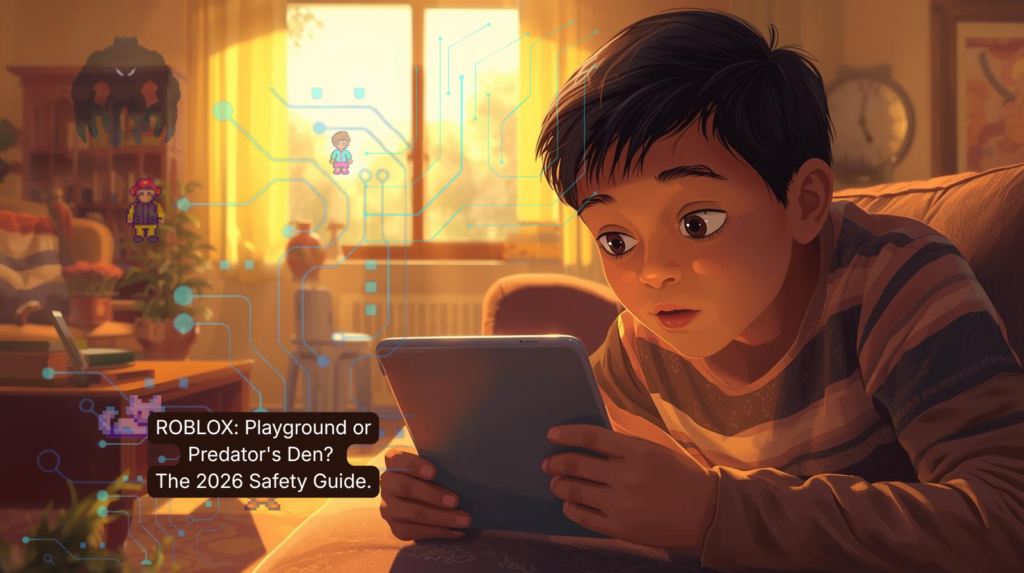
Is Roblox the new digital playground or a predator’s hunting ground? Here is everything you need to know to move from panic to partnership.

I used to think Roblox was just “online LEGOs.” I watched my daughter, playing Grow a Garden. It looked innocent enough—blocky characters, planting seeds, trading fruits. It felt like a digital lesson in the barter system.

Then, one evening, I glanced at her screen and froze.

A message from “CoolGamer_2015” popped up: “Hey Riya, want free Robux? Give me your mom’s phone number and I’ll send you the code.”

If this scenario sounds familiar—or terrifyingly possible—you are not alone.

With over 380 million monthly active users (40% of whom are under 13), Roblox is the defining digital experience of this generation. But while it offers creativity, it opens a door to risks every parent must manage.

This isn’t just a tech guide; it is your 2026 survival framework to keeping your child safe, sane, and emotionally resilient in the Metaverse.


Quick Summary

Is Roblox Safe? The Short Answer: Roblox contains user-generated content that can be risky for kids under 13. However, it can be made safe by:

  1. Setting correct Age Gating.
  2. Turning on “Account Restrictions.”
  3. Disabling Chat for strangers.

1. What is Roblox Really? (It’s Not Just a Game)

To protect your child, you must understand the beast. Roblox is not a single game like Mario or FIFA.

It is a YouTube for gaming. Just as anyone can upload a video to YouTube, anyone can create a “game” (called an Experience) on Roblox. This means your child isn’t playing a curated product; they are navigating a universe of millions of user-generated worlds.

The Core Mechanics:

  • The Platform: A social hub where kids meet, chat, and jump between games.
  • The Economy: “Robux” is the digital currency bought with real money. This creates a massive “Creator Economy” where developers (some kids themselves) compete for your child’s attention and wallet.
  • The Social Network: It is a massive chatroom disguised as a video game.

2. Why Are Kids Obsessed? (The Psychology)

Why can’t they just put the mobile / iPad down? It’s not just “fun”—it’s engineered psychology.

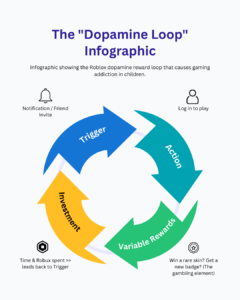
  • Dopamine Loops: Variable rewards (like gambling) keep them coming back for “one more round.”
  • FOMO (Fear Of Missing Out): Limited-time events and rare items create social pressure. “If I don’t get this skin, I’m a nobody.”
  • Social Belonging: For 10-year-olds today, Roblox is the playground. Opting out can feel deeply isolating.

Research Note: Studies from the Oxford Internet Institute (2024) suggest that while “screen time” itself isn’t the enemy, the quantity and quality of interaction matters. Passive scrolling or negative social interactions are where the real harm lies, not just in the minutes spent playing.

Infographic showing the Roblox dopamine reward loop that causes gaming addiction in children.
The “Dopamine Loop” Infographic

3. The 5 Hidden Dangers Every Parent Must Know

Every parent should know following dangers associated with Roblox (click the link to read in detail).

  1. The “Best Buddy” Effect (Grooming & Predatory Contact)
  2. The “Free Robux” Trap (Financial Scams)
  3. “Digital Playgrounds” & Cyberbullying
  4. Inappropriate Content and Explicit Games
  5. The Addiction Algorithm

Jump directly to How to Set Up Parental Controls on Roblox (Step-by-Step Guide)


Recent investigations have highlighted significant cracks in the platform’s safety. Here is what you need to know:

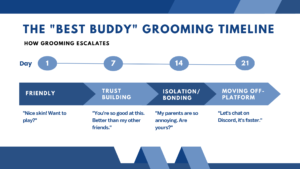
  1. The “Best Buddy” Effect (Grooming & Predatory Contact)

Imagine Riya meets Meera online who becomes her best buddy. They chat daily. Meera knows Riya’s school, her favourite color, and her dislike of math.

  • The Reality: “Meera” could be a 40-year-old groomer using “trust-building” techniques.
  • The Data: A bombshell report by Hindenburg Research (October 2024) flagged serious concerns about predator activity on the platform, noting instances where users could access inappropriate content despite filters.

Check Your Child’s Settings Now 

Timeline illustration showing the stages of online grooming on gaming platforms like Roblox.

  1. The “Free Robux” Trap (Financial Scams)

The virtual economy creates real financial risks. Social pressure and digital identity demands (new avatar looks, skin) require Robux.

  • Phishing: Sites promising free money in exchange for passwords or sensitive information.
  • The Wallet Drain: McAfee’s “Connected Family” Report highlights that financial theft and gaming scams are top concerns for parents, with many discovering unauthorized charges only after the damage is done.

  1. “Digital Playgrounds” & Cyberbullying

Bullying on Roblox targets a child’s avatar—their digital identity. Exclusion from games or “shaming” an avatar for looking “poor” (called a “bacon hair” in Roblox slang) is common.


  1. Inappropriate Content and Explicit Games

  • If the privacy settings are not set properly, young kids may be subject to inappropriate content and explicit games.
  • Users sometimes upload games that simulate sex or violence. While Roblox moderation removes them, they can stay up long enough for thousands of kids to see them. The damage is done.
  1. The Addiction Algorithm
  • It’s not just “distraction”—it’s design. The dopamine loops, FOMO are hard to ignore, specially for younger kids whose cognitive capabilites are still developing.
  • Watchdog groups like Truth in Advertising (TINA.org) have filed complaints regarding “deceptive marketing” and “advergames” on Roblox—games that blur the line between entertainment and ads. These mechanisms are designed to maximize time-on-device, which Common Sense Media notes often leads to “time displacement”—eating into sleep and homework time.

Read more about screen addiction and science-backed strategies to reset the habits.


4. How to Set Up Parental Controls on Roblox (Step-by-Step Guide)

Do not ban Roblox. Manage it. Here is your immediate action plan.

Phase A: The Technical Shield (Do This NOW)

  1. Accurate Age Gating

Ensure the birth year on the account is correct for age-appropriate default settings to apply.

  • Why? Roblox automatically applies strict filtering for users under 13. If the account age is set to be 13+, you disable these protections.

  1. The “Privacy Settings” Lockdown

Enable parent PIN and lock down the Privacy Settings. Go to Settings -> Privacy:

  • Contact Settings: Set “Who can message me?” to Friends Only (only if you personally know these friends) or No One (Recommended: No One For children under 9).
  • Account Restrictions: Turn this ON. This limits play to a curated list of developer-verified, safe games.

  1. The Financial Firewall

  • Strict Rule: No credit cards saved on the device.
  • Two-Factor Authentication (2FA): Enable this so no one can hack the account.
  • Spend Caps. Disable or strictly cap in‑app purchases/Robux

The ‘Legal’ Binding

  • Create a written Family agreement together.
  • Co-create a family media plan with device zones, content, boundaries, safety rules and rewards/ consequences.
  • Both sign and date it. Post it near the gaming device.

Download our Family Digital Agreement template for free.

(Don’t Argue. Agree. Download the exact Contract I use with my daughter.)


Phase B: From Surveillance to Coaching

Technical controls are the fence; you are the lifeguard.

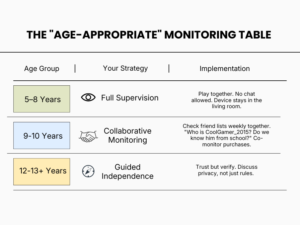
Chart showing age-appropriate parental supervision strategies for Roblox, from full supervision to guided independence.
The “Age-Appropriate” Monitoring Table for Roblox

Phase C: The “Stop Phrases” Script

Teach your child exactly what to say/do. Print this out:

Roblox Safety Guide- Coaching Script for kids safety online


5. Healthier Alternatives to Roblox

No digital platform is perfectly safe, but some game types carry lower inherent risk because they are non‑chatty, non‑UGC, and non‑loot‑box-heavy.

If the risks feel too high, or you want to diversify their digital experience, try these safer bets:

  1. Minecraft (Creative Mode/Private Server): Focuses on building, less on social “hanging out” with strangers.
  2. Nintendo Switch Games (Mario/Zelda): These are “walled gardens”—complete, polished games with no user-generated surprises.
  3. Khan Academy Kids / Prodigy Math: Gamified learning that feels like an (Role-Playing Game) RPG but teaches actual skills.

6. The Missing Link: Emotional Intelligence (EQ)

Here is the harsh truth: You can set every parental control in the world, and a smart kid will eventually find a way around it.

The only permanent filter is your child’s brain.

Roblox is today’s challenge. Tomorrow it will be VR, AI companions, or the next big app. The solution isn’t chasing apps; it’s building Digital Resilience.

This requires specific EQ skills:

  1. Urge Control: The ability to close the laptop when the timer rings, even if they are winning.
  2. Critical Thinking: The ability to pause and ask, “Why is this stranger being so nice to me?”
  3. Self-Regulation: Managing the anger of losing a game without throwing a tantrum.

GrowUpWise specializes in exactly this. We don’t just teach safety; we teach the Emotional Intelligence required to navigate the modern world.

[Start Free Lesson]

Does turning off Roblox cause a Level-10 Meltdown?

That isn’t bad behavior. That is a Dopamine Crash. Our Emotional Intelligence module teaches your child how to self-regulate when the screen goes black.

Enrol in the GrowUpWise Emotional Intelligence Module today. [Start Your Journey]


Checklist of 5 warning signs that a child is being groomed or unsafe on Roblox.
5 Red Flags Your Child is Unsafe on Roblox

Frequently Asked Questions

Q: Is Roblox actually safe for a 7-year-old?

A: With “Account Restrictions” turned ON and chat disabled, yes. But it requires supervision. Treat it like a public park—you wouldn’t leave a 7-year-old there alone.


Q: My child screams when I turn it off. Is he addicted?

A: Likely not “addicted” in the clinical sense, but they are experiencing a dopamine crash. The game is designed to be hard to quit. This is a sign that they need help building Urge Control skills (a core pillar of our Emotional Intelligence course).


Q: Should I read my child’s messages?

A: Under 10: Yes, absolutely. Frame it as safety, not spying. “I check your messages like I check your seatbelt.”

Ages 10-12: Do it together. “Let’s look through your chats to see if anyone is being weird.”

Ages 13+: Spot checks based on trust.


Q: How do I talk to my child about online safety without scaring them?

A: This is perhaps the most important question—effective communication is your strongest protective tool.

  • Frame it as “building skills” not “restricting freedom”.
  • Keep conversations ongoing, not one-time lectures

For ages 5-8: “Just like we don’t talk to strangers in the park without Mummy or Papa there, we don’t chat with people we don’t know online. If someone we don’t know tries to message you, you come tell me right away—you won’t be in trouble, I just want to help keep you safe.”

For ages 9-11: “I want to talk about staying safe while gaming. Sometimes people online aren’t who they say they are—an adult might pretend to be a kid to try to become friends. If anyone asks you personal questions, offers you gifts, or makes you feel uncomfortable, that’s the moment to pause and talk to me. I trust you to make good choices, and I’m always here to help.”

For ages 12-13: “Let’s talk about online safety as you’re getting more independent. You’re smart and making good decisions, and I want to make sure you have all the information you need. Here’s what predatory behavior looks like online… Here’s why some people target kids on gaming platforms… What would you do if someone approached you this way?”


Final Thoughts: Partnership, Not Panic

Roblox isn’t “evil,” but it is a wilderness.

Your goal isn’t to be a prison warden. It is to be a partner. By combining the technical settings in this guide with the emotional skills taught at GrowUpWise, you aren’t just protecting your child from Roblox—you are preparing them for life.

Start today. The conversation you have tonight might be the one that keeps your child safe tomorrow.


Written by Anshula Verma

Raising Future-Ready Kids: 7 Essential Life Skills Every Child Needs (Implementation Roadmap + Free Worksheet)

Raising Future-Ready Kids: 7 Essential Life Skills Every Child Needs (Implementation Roadmap + Free Worksheet)

Introduction: Why Raising Future-Ready Kids Matters More Than Ever

The world our kids are growing into looks nothing like the one we grew up in.

Getting a degree from a prestigious college was once a golden ticket to a successful career. Today, even the elite institutions are struggling with placements. The workforce landscape is changing at a fast pace. Jobs that exist today may not exist tomorrow! AI, automation, global shifts, and social transformations are reshaping what it means to thrive in life—not just in careers. The pace of the change is terrifying!

As parents, we want our kids to succeed. But success is no longer just about grades, test scores, or technical skills. Instead, it’s about resilience, emotional intelligence, adaptability, problem-solving, and a growth mindset—the life skills that research shows are essential for long-term success and wellbeing.

The challenge? These skills aren’t always taught in schools. Which means the responsibility falls on parents and caregivers to nurture them at home.

This guide is your evidence-based, science-backed roadmap to raising future-ready kids. You’ll discover:

  • The 7 core life skills every child needs for tomorrow.
  • Insights from neuroscience and child psychology that explain why they matter.
  • A step-by-step Implementation Roadmap with practical activities for parents.
  • A free downloadable worksheet so that you can start today

Let’s dive in.


In this guide, we cover:

  1. Emotional Regulation

  2. Growth Mindset

  3. Communication Skills

  4. Critical Thinking

  5. Financial Literacy

  6. Digital Safety & Balance

  7. Adaptability & Curiosity

Click any skill to jump to that section.


The Science Behind Future-Readiness: What Research Tells Us

Before we get into the “how,” let’s ground ourselves in the “why.”

  1. The Brain’s Plasticity

Neuroscience confirms that children’s brains are highly plastic between ages 5–12. The prefrontal cortex—responsible for decision-making, self-regulation, and problem-solving—is still developing (Center on the Developing Child, Harvard University). This makes childhood the prime window to build lifelong habits and skills.

  1. Emotional Regulation Predicts Future Success

A landmark longitudinal study (Moffitt et al., 2011) tracked 1,000 children over 30 years and found that children with higher self-control grew into healthier, wealthier, and happier adults. It concluded that a child’s ability to self-regulate is a stronger predictor of adult success than their IQ or socioeconomic background. 

  1. Growth Mindset Boosts Achievement

Carol Dweck’s research shows that children who believe their abilities can grow through effort (growth mindset) perform better academically, show more resilience, and are more likely to take on challenges.

  1. Social-Emotional Skills and Academic Success

The Collaborative for Academic, Social, and Emotional Learning (CASEL) finds that social-emotional learning (SEL) increases academic performance by 11 percentile points. SEL encompasses self-awareness, self-management, social awareness, relationship skills, and responsible decision-making.

Life skills and academic learning aren’t separate—they reinforce each other.

Key Takeaway: Future readiness is not an extra. It’s a scientifically proven foundation for lifelong success and wellbeing.”


The 7 Core Life Skills for Future-Ready Kids

These are the building blocks every child needs:

  1. Emotional Regulation – Managing feelings, learning calm-down strategies, resilience, and empathy.
  2. Growth Mindset – Embracing challenges and learning from failures.
  3. Communication Skills – Active listening, conflict resolution, storytelling.
  4. Critical Thinking – Asking good questions, problem-solving, and analytical capabilities.
  5. Financial Literacy – Understanding money, saving, and smart spending.
  6. Digital Safety & Balance – Protecting online identity, managing screen time, navigating technology wisely and setting boundaries.
  7. Adaptability & Curiosity– Staying flexible and open to change.

Feeling overwhelmed by all 7 skills? You don’t have to memorize them.

👉 Download the One-Page Cheat Sheet: The Future-Ready Skills Tracker

Each of these can be nurtured through simple, practical parenting strategies. That’s where the roadmap comes in.


Implementation Roadmap: How Parents Can Raise Future-Ready Kids

This is the actionable heart of the guide. Below is a step-by-step roadmap, with ready-to-use examples for each skill area.

Each skill development area includes:

  • Why it matters (what’s at stake).
  • Scientific Insight (why it works).
  • How to implement (science backed strategies that work).
  • Example Activity (ready-to-use at home).
  1. Build Emotional Regulation
  • Why it matters: Kids who can manage emotions recover faster from setbacks and form healthier relationships.
  • Science says: Co-regulation (parent + child managing emotions together) strengthens the child’s neural pathways for self-regulation (Siegel, The Whole-Brain Child).

How to implement:

  • Create a “Calm Corner” at home with stress balls, colouring books, or breathing prompts. When your child feels upset, they can go to the “Calm-Down Corner” and choose a tool to calm down before reacting.
  • Use “Name it to Tame it”—help your child identify and label emotions (“I feel frustrated”) to reduce intensity.
  • Role-model calm responses when stressed.

Example activity:

  • “Traffic Light Technique” → Red = Pause, Yellow = Breathe, Green = Act. Kids can draw their own traffic light poster.

2: Cultivate a Growth Mindset

  • Why it matters: Kids with growth mindset are more persistent, enterprising and less afraid of failure.
  • Science says: Carol Dweck’s research shows mindset language rewires how children see effort vs. talent, shifting their focus from innate ability to the value of dedication and hard work. Praising talent in children can foster a “fixed mindset,” On the other hand, praising effort and process, fosters “growth mindset,”

How to implement:

  • Praise effort, not outcome. (“I love how hard you worked on this puzzle!”)
  • Normalize mistakes by sharing your own and framing them as learning opportunities.
  • Use the word “yet” with challenges. When your child says, “I can’t do fractions,” Use growth-oriented language to reply: “You can’t do fractions yet. Let me help you where you are getting stuck.”

Example activity:

  • Create a “Growth Journal” where your child writes down things they can’t do yet and tracks progress.

3: Strengthen Communication Skills

  • Why it matters: Effective communication is the foundation of teamwork, leadership, and relationships.
  • Science says: Children’s early language exposure impacts their later linguistic skills, cognitive abilities, and academic achievement (NIH).

How to implement:

  • Use family meals as “tech-free conversation zones.” Discuss any topic that interests your child. Encourage their participation.
  • Play “Feelings Charades” where kids guess emotions through expressions.
  • Encourage storytelling—ask open-ended questions (“What was the funniest part of your day?”).

Example activity:

  • Play “Two Truths and a Dream” → Share two true things and one dream, and let others guess. Builds expression and listening skills.

4: Kindle Critical Thinking

  • Why it matters: Future jobs will require innovation, problem-solving and adaptability.
  • Science says: Play-based problem-solving boosts executive function and creativity (Barker et al., 2014). Open-ended questioning activates the brain’s prefrontal circuits for reasoning and flexibility (Diamond, 2013).

How to implement:

  • Ask guiding or probing questions instead of giving solutions. (“What’s another way we could try this?”)
  • Encourage board games like chess or strategy puzzles.
  • Play “What Else Could It Be?” with everyday objects. (Example: Spoon “Besides eating, what else could this be?” drumstick, tiny shovel, catapult)

Example activity:

  • “Design a Superhero Tool” → Give kids random items (string, cup, cardboard) and ask them to invent a tool.

5: Introduce Financial Literacy

  • Why it matters: Early money habits stick for life.
  • Science says: Children start forming financial attitudes by age 7 (Cambridge University study, 2013).

How to implement:

  • Give small allowances and teach budgeting (Spend, Save, Share jars). (Read more on why 6-year-olds need money lessons here.
  • Talk openly about household decisions (why you compare prices, why saving matters, various investment strategies).
  • Use personal stories and games to explain concepts like interest and inflation.

Example activity:

  • “Savings Challenge” → Kids set a goal (toy, book) and track progress weekly.

6: Teach Digital Safety & Balance

  • Why it matters: Indian children’s screen time is very high, children under five averaging 2.2 hours daily (double the recommended safe limit) and adolescents exceeding 4-5 hours daily. Safe, balanced use is essential.
  • Science says: Excessive screen time impacts attention and sleep; guided use builds digital literacy (APA, 2019).

How to implement:

  • Create a Family Tech Agreement with rules everyone follows. (See our full guide on Digital Safety for Indian Kids)
  • Teach “Pause-Think-Post” before sharing online.
  • Balance screen time with outdoor play and offline hobbies.

Example activity:

  • “Digital Detox Jar” → Add fun offline activities to a jar; kids pick one during screen-free time.

7: Nurture Adaptability & Curiosity

  • Why it matters: The only constant is change. Curious, adaptable kids thrive in uncertainty.
  • Science says: Curiosity lights up the brain’s reward system, boosting learning and retention (Gruber et al., 2014).

How to implement:

  • Celebrate questions, not just answers. (“That’s an interesting question! Let’s explore it together.”)
  • Rotate books, activities, or toys to spark novelty.
  • Involve kids in planning family events or solving small household challenges.

Example activity:

  • “Curiosity Box” → Place mystery items (shell, old photo, tool) in a box and explore them together.

Track their growth, week by week. Get the free Future-Ready Skills Tracker. 

To make this roadmap actionable, we’ve created a free downloadable worksheet on Skill Tracker – Track weekly progress on emotional regulation, communication, problem-solving, and other life skills.


FAQs: Raising Future-Ready Kids

Q1: What age should I start teaching life skills?
Start as early as 5. Even concepts like saving money, labelling emotions, or asking curious questions can be introduced in age-appropriate ways.

Q2: How much time should I spend on these activities daily?
10–15 minutes of focused, intentional practice is enough. The goal is consistency, not length.

Q3: My child resists. How do I encourage them?
Make it fun and collaborative. Use games, stories, or family challenges instead of lectures.

Q4: What if I don’t have time as a busy parent?
Integrate skill-building into daily routines—mealtime, bedtime, grocery shopping, or car rides.

Q5: Are these strategies culturally adaptable?
Yes. The roadmap uses universal principles of neuroscience and psychology but allows flexibility for cultural values, family routines, and traditions.

Q6. How do I balance academics with these skills?
Use smart ways to integrate such practices into day-to-day activities. For example, use homework mistakes as growth mindset opportunities. Shift to open ended questions.

Q7. Do I need special training to teach my child?
No. Simple daily practices—like dinner table questions—are enough.


Conclusion: Planting Seeds for Tomorrow

Raising future-ready kids doesn’t require perfection or massive time investments. It requires consistent, small steps, grounded in science and infused with love.

Every time you help your child pause before reacting, encourage them to try again, or celebrate their curiosity, you’re wiring their brain for resilience, adaptability, and lifelong success.

The world may be uncertain, but one thing is clear: by building these skills today, you are gifting your child the confidence and tools to thrive tomorrow.

👉 Track Their Growth, Week by Week. Download the free Future-Ready Skills Tracker worksheet.

Don’t just hope they are learning—see it happen. Get the free Future-Ready Skills Tracker to measure their progress in confidence, resilience, and emotional intelligence.

To make this roadmap actionable, we’ve created a free downloadable worksheet on:

Skill Tracker – Track weekly progress on emotional regulation, communication, problem-solving, etc.

Written by Anshula Verma

Why Chores Are the Secret to Raising Successful, Happy Kids (Backed by Science)

Why Chores Are the Secret to Raising Successful, Happy Kids (Backed by Science)

My parents didn’t let me do any household chores. Their focus was entirely on my studies. And to be fair, I excelled in them.

Naturally, I followed in my parents’ footsteps. I never let my daughter get involved in any household chores until she was 9 years old. I thought I was protecting her.

In our Indian context, where we are blessed with domestic help, it felt almost cruel to make her work. I wanted to give her time to study and play, keeping all the heavy work to myself or the help.

It was out of my love for her!

But I wasn’t protecting her. I was handicapping her.


I was taking away an important life lesson. I missed the opportunity to let her become a confident, independent, and responsible person. In hindsight, I wonder: would doing chores early in my childhood have accelerated my pace of learning the life skills required for being successful and happy?

I believe so. And now, I am changing the narrative for my daughters.

My elder daughter used to struggle with discipline. Initially, it was hard for her to even fold her clothes, serve her own food, or clean up her room. Seeing clothes lying on the floor bothered me as she grew up. I used to repeat instructions 20 times, and feeling guilty after snapping at her for not doing simple things, like putting away her plate after meals. Her non-compliance and back-talk led to daily struggles.

However, once I understood the science behind chores, the tension started melting. Conversations became calmer. Discipline began to form in tiny daily habits.

Through this post, I want to share the strategy that worked for me —and how it forms the foundation of the GrowUpWise philosophy.

👉 Skip to the end and download the Free Victory Tracker for Chores 

(Make chores fun, not a fight. This printable tool gamifies daily tasks so your child feels proud to help out—without you asking twice.)


THE SCIENCE: WHY “CHORES” ARE ACTUALLY “LIFE SKILLS”

There is actual science behind this. The long-running Harvard Grant Study confirms that kids who start chores early grow up to become successful, happy adults.

It isn’t about the clean dishes. It’s about:

  • Problem-solving: Figuring out how to organize a messy drawer.
  • Self-management: Remembering to do tasks without being told.
  • Higher self-esteem: The feeling of “I contributed to this family.”
  • Time management: Balancing play, homework, and duties.
  • Empathy: Understanding the effort required to run a home.

This is exactly why I founded GrowUpWise. We often focus on grades, but we forget the “invisible curriculum” of life skills—resilience, accountability, and grit. Chores are the first step in that curriculum.


THE STRATEGY: BREAKING THE “PRINCE/PRINCESS” SYNDROME

We tend to overprotect or pamper our kids, letting them have it easy to “save” them from hard work. But we don’t realize that by doing so, we are taking away their opportunity to explore solutions, build a growth mindset, and learn resilience from small failures.

Julie Lythcott-Haims, former Dean of Freshmen at Stanford, speaks about this in her famous TED Talk. She argues that chores are the playground for learning essential life skills.


AGE-APPROPRIATE FRAMEWORK – Where to Start?

If you are wondering where to start, here is a breakdown based on development stages:

  • Ages 2-3: Putting away toys, dressing themselves with help, putting dirty clothes in the basket.
  • Ages 4-5: Making their beds, keeping their plates away after meals, clearing the table (yes, even if the maid is there!).
  • Ages 6-7: Wiping tables and counters, folding laundry, sweeping floors.
  • Ages 7-9:Loading/unloading the dishwasher, helping prepare meals, tidying their rooms, packing their own school lunch.
  • Ages 10-11: Changing bed sheets, cleaning the bathroom, basic non-fire cooking.
  • Ages 12 and above: Managing a small budget for groceries, full meal preparation, babysitting younger siblings.

Want this list on your fridge? Download our printable Chores-by-Age Checklist inside the Victory Tracker.


THE IMPLEMENTATION BLUEPRINT

Here is the practical guide that helped me transition my daughters from “no chores” to “helpful team members.”

  • Start Early (It’s never too soon): Even toddlers can help! My toddler loves cleaning up the mess she creates during her meals (even if my bill for tissues and wet wipes is skyrocketing!).
  • The “Maid” Conversation: If you have house help, tell your child: “Didi helps us, but she doesn’t serve us. Your mess is your responsibility.” This distinction is critical for preventing entitlement.
  • Start Small & Offer Choice: Don’t expect them to suddenly master all chores. In my case, my elder daughter started with just one thing: watering the plants daily. Then we added folding laundry. Letting them pick their task reduces resistance.
  • Guide and Show Them: Kids need guidance, not just orders. A lot of resistance melts away when I say, “Let me show you how,” or “Let’s do this together first.”
  • Position it as a Team Effort: Invoke a sense of belonging. Let kids know they are part of the “Family Team.” My daughters pitch in much happier when they feel their contribution matters to the household.
  • Consistency Over Perfection: It will be messy. It will take them longer to fold a shirt than it takes you. Don’t let that moment “when you’re exhausted and just do the chore yourself because it’s faster” beat you. Keep your patient hat on. The long-term effects—raising a capable adult—are worth the short-term mess.

Child helping with household chores to learn life skills.

THE RESULT? A TRANSFORMATION.

The day I saw her proudly fold her clothes without being asked, something shifted in me.
I realised this was not about chores — it was about who she was becoming.

  • BEFORE: Chaos, nagging, guilt, stress.
  • AFTER: A calmer home, an independent child, fewer arguments, and more connection (and celebratory dances!).

These tiny changes built the foundation for real-life skills.


READY TO RAISE A “LIFE-SKILLED” KID?

The shift I saw in my daughter didn’t come from chores alone.
It came from a deeper system of micro-habits — the same one that forms the foundation of GrowUpWise.

GrowUpWise isn’t another ‘parenting course.’ It’s a set of everyday micro-habits that make your child calmer, more capable, and more confident — with just 5 minutes a day.

Imagine your child:

  • negotiating screen time calmly…
  • saving money thoughtfully…
  • resolving conflicts with maturity…

You don’t need long lessons. Just 5 minutes a day creates real change using our scripts, habit loops, and customizable trackers.


START TODAY (AND GET A FREE GIFT) 🎁

Don’t miss the next tool that could save you months of frustration.

I have developed a “Kids Weekly Chores Victory Tracker”—a simple tool to gamify these chores and life skills. It makes your child want to complete their habits without you nagging.

Join the GrowUpWise parents building calmer, happier homes:👉

P.S. This tracker includes a ‘Reward Menu’ template so you know exactly how to celebrate their wins.

Written by Anshula Verma

Digital Danger: What Every Parent in India Needs to Know About Keeping Kids Safe Online

Digital Danger: What Every Parent in India Needs to Know About Keeping Kids Safe Online

Introduction: A Parent’s Worry in the Age of Screens

It was a bustling Sunday morning as we had guests coming over. When I walked into my kid’s, I found my 9-year-old daughter glued to my tablet. The screen flickered with a fast-paced YouTube video—bright colors, catchy music, but also, a disturbing imagery with a link leading her to a potentially dangerous website.

My heart sank.

I had given her the tablet for a short cartoon break, but in just ten minutes, she had wandered into a digital alley she never meant to enter.

Sounds familiar?

If you’re a parent in India today, you’re not alone. Many parents are worried about online Safety for Kids in India.

Children between 5–12 years spend an average of 3–4 hours a day online (Nielsen India Report, 2023). From YouTube shorts to online gaming to classes on Zoom, the internet is no longer an extra—it’s the necessary evil that needs to be tamed.

The digital powerhouse that opens doors to knowledge also expose children to risks—cyberbullying, screen addiction, unsafe and inappropriate content, privacy violation and predatory strangers!

This is the reality of digital danger.

And as parents raising future-ready kids, our challenge is not just to protect them but to prepare them—with habits, skills, and resilience that will keep them safe, balanced, and thriving.

This post is your science-backed, culturally-rooted roadmap for digital parenting, to keeping children safe online while nurturing lifelong digital wisdom.

In a hurry? Don’t leave without protection. 👉 Skip to the end and download the Family Digital Safety Toolkit 

What you will learn:

(click on the link to navigate to the section)
  1. The Real Stats in India

  2. Hidden Dangers (Predators & Privacy)

  3. Why Bans Don’t Work

  4. 7-Step Safety Roadmap

  5. Download the Toolkit


The Digital Childhood in India: What’s Really Happening?

  1. The Numbers We Can’t Ignore
  • 70% of Indian children aged 8–12 have experienced at least one cyber risk such as bullying, inappropriate content, or data misuse (McAfee India Report, 2022).
  • 1 in 3 internet users in India is under 18 (UNICEF, 2019).
  • The average age for a child’s first smartphone is now 10 years in Indian metros (IAMAI Report, 2023).
  1. Why Kids Are More Vulnerable

Children’s brains are still developing. The prefrontal cortex—the area responsible for impulse control and decision-making—doesn’t fully mature until the mid-20s (Casey, 2015, Nature Reviews Neuroscience).

This means kids are biologically more prone to:

  • Clicking impulsively.
  • Believing strangers online.
  • Getting hooked on addictive algorithms.

Key Insight: Kids aren’t just “mini-adults.” They process risk differently, and hence parental guidance and skill-building support is a must to help them in navigating it safely.


Behind the Screen: The Hidden Dangers Parents Must Know

Internet and social media are going nowhere! Online spaces are lurking with dangers that we should understand to keep our kids protected online. Let’s delve into these.


  1. Screen Addiction

“Just five more minutes, Mumma!”

If you’ve heard this (or said it yourself while scrolling), you understand the pull. But for children aged 5-12, whose brains are at peak neuroplasticity, the impact runs deeper than a bad habit.

  • Apps and games are designed like slot machines, rewarding kids with likes, coins, and points (Alter, 2017, Irresistible).
  • Behind the apps and games, we check every day, there’s a whole world of research and design aimed at making them as engaging—and addictive—as possible.
  • Excessive screen time can disrupt sleep, reduce attention span, and even lead to emotional dysregulation and behavioural issues in kids.

  1. Cyberbullying

  • Over 36% of Indian children reported being bullied online (Microsoft Global Online Safety Survey, 2021). The impact is not just emotional but neurological—chronic stress alters brain circuits tied to self-esteem and resilience.
  • Students in the cyberbullying victims/bullies’ group had the worst scores for psychological and physical health and academic performance; associated with depression and anxiety.

  1. Exposure to Unsafe Content

  • Unfiltered access leads to early exposure to violence, pornography, and harmful ideologies.
  • Research shows that such early exposure may lead to poor mental health, aggressive behaviour and rewire reward pathways in the brain, leading to desensitization (Owens et al., 2012).
  • It’s not just YouTube. Consider:
    • Gaming chat rooms: Where adult strangers or predators can communicate with your child in real-time and influence them perilously
    • TikTok and Instagram Reels: Where children as young as 7 are exposed to body image pressure, dangerous challenges, and premature sexualization
    • WhatsApp groups: Where offensive jokes, misinformation, and inappropriate content spread through class groups

  1. Digital Strangers & Predators

  • Children often cannot differentiate between safe and unsafe online friendships.
  • Grooming tactics—slow trust-building by predators—are rising in India (NCRB, 2022).
  • Online grooming is a sophisticated form of manipulation where predators deliberately build relationships with children online to leverage their vulnerabilities and prepare them for sexual exploitation or even sex trafficking initiation.

  1. Data Privacy & Exploitation

  • Children unknowingly share data via games and apps that can be used by online predators to create their profiles or identify vulnerable targets for exploitation.
  • A 2022 UNICEF report found that most Indian parents underestimate how much personal information their kids’ apps collect.
  • PwC India survey (2024) reveals that only 16% consumers in India understand the Digital Personal Data Protection (DPDP) Act. 56% of consumers are not aware of their rights related to personal data and 69% of consumers are not aware of their rights to take back their consent. Whenever a minor’s personal data is involved, 72% of respondents are not aware that handling a minor’s personal data requires a parent/guardian consent.

Here’s Free Digital Safety Toolkit (Downloadable) for you to take the first step today to ensure Online Safety for Kids in India

What’s inside this free Digital Safety Toolkit for Indian Parents (ages 5–12).

  • Family Digital Agreement Template (ready to print & sign).
  • Screen Time Tracker (visual progress)
  • Digital Safety Rules Poster (print-ready)

Why Bans Fail: Building Digital Wisdom, Not Just Digital Walls

The “just ban screens” approach fails for three reasons:

  1. Digital literacy is non-negotiable for future success: By 2030, jobs success will require digital skills (World Economic Forum). Completely restricting access handicaps your child’s future.
  2. Forbidden fruit is sweeter: Children with total bans are more likely to engage in risky online behavior when they do get access, because they haven’t developed self-regulation skills.
  3. It damages trust: Extreme restrictions signal that you don’t trust your child, making them less likely to come to you when they encounter danger.

So, what does work?

Neuroscience shows that habit loops formed in childhood last into adulthood (Lally et al., 2010). Which means the digital habits you help your child form today will define their future relationship with technology.

“Children don’t need stricter firewalls. They need stronger inner walls-resilience, critical thinking, and trust.”

The goal is not to ban screens but to train digital wisdom.


The Parent’s Roadmap to Online Safety for Kids in India

(Science-Backed & Practical)

Here’s a step-by-step implementation guide you can start today.


Step 1: Create a Family Digital Agreement

  • What it is: A written pact with rules for screen use.
  • Why it works: Kids are more likely to follow rules they help create. Research on “autonomy-supportive parenting” (where parents intentionally involve their kids in making decisions and performing actions, in age-appropriate and safe ways) shows this increases compliance (Deci & Ryan, 2000).
  • How to do it in India: Print a simple poster with rules like “No phones at mealtime,” “Screen-free bedtime,” and sign it as a family.
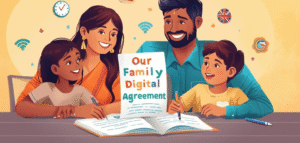
Family Digital Agreement for Screentime management

Step 2: Balance Screen Time with Real Play

  • Science says: Play-based learning is recognized as a pivotal approach in early childhood education, fostering cognitive development through exploration, imagination, and social interaction.
  • Action idea: Introduce a “Digital Detox Jar”—fill it with chits like kite-flying, favourite sports, rangoli drawing, craft making, dance party. Kids pick one when it’s time to unplug.

Create Age-Appropriate Boundaries for screen time. Check this post on details “Too Much Screen Time? Science-Backed Ways to Reset Your Child’s Habits (Without Tears or Fights)”.

Balance Screen Time with Play Time

Step 3: Teach Pause–Think–Post

  • Why: A simple pause before clicking reduces impulsive behavior.
  • Science: Excessive screen time impacts attention and sleep; guided use builds digital literacy (APA, 2019). The mindful pause activates the prefrontal cortex, giving the brain time to respond thoughtfully rather than impulsively.
  • Activity: Create a traffic light poster → Red (Pause), Yellow (Think), Green (Post/Click safely). Include ‘Think’ prompts like “Will I love this post after 2 days?”, “Is this giving away too much information?”,” Would it be okay if everyone saw this?”

Step 4: Role-Model Digital Behavior

  • Why: Kids imitate what they see. Through observational learning, they imitate both positive and negative behaviours
  • Science: Mirror neurons make children copy parent behaviours unconsciously (Marco Iacoboni).
  • Tip: Keep your own phone away during meals or family time. Kids notice.

Step 5: Keep Communication Open

  • Why: Regular, judgement-free check-ins give kids confidence to open up with parents without being scared of reprimand or confiscation of screens. Children who talk openly with parents are less likely to hide online risks or creepy stuff.
  • Science: Warm, responsive parenting builds trust circuits in the brain (Siegel, 2012).
  • Action: Create a bedtime ritual where kids can share “one good, one tricky” thing they saw online that day. Show genuine interest in what they watch.
Open communications for digital safety of kids

Create judgment-free zones: If your child encounters something disturbing, your first response determines whether they’ll trust you with future concerns. Avoid: “I told you not to click random things!” Instead: “That sounds scary. I’m so glad you told me. Let’s figure out what happened together.”


Step 6: Strategic Supervision (Smart Monitoring without being overprotective or controlling)

Our kids need support and guidance for navigating online space safely.

Use technology wisely for supervising your kid’s online activities.

  • Enable parental controls on devices, routers, and apps
  • Use monitoring apps transparently (tell your child what you’re monitoring and why)
  • Check privacy settings quarterly (they update constantly)
  • Be aware of “finsta” accounts (fake Instagram accounts kids create to avoid parent monitoring)

Transparency is non-negotiable: Never use secret monitoring (spyware on phones, hidden cameras). It destroys trust and models the exact behavior you’re trying to prevent—deception.

Random checks with guidance: Instead of daily surveillance, do periodic reviews together. Once a week, sit with your child and go through:

  • Their followed accounts
  • Recent search history
  • Friend requests they received
  • Any messages that felt “weird”
  • Games they are playing online

Frame it as partnership: “I’m helping you practice safe decisions until your brain is ready to do it automatically.”

Technical essentials for Indian parents to ensure kid’s digital safety:

  • Set up Google Family Link or Apple Screen Time with appropriate age restrictions
  • Disable in-app purchases (or require password approval)
  • Turn off location services for social apps
  • Use YouTube Kids instead of regular YouTube for children under 12
  • Check app permissions regularly (A drawing app needing microphone or location access should raise concerns)


Step 7: Build Life Skills Alongside Digital Safety

This is where most parents miss the bigger picture. Online safety isn’t just about filters and passwords—it’s about building resilience, critical thinking, and emotional regulation.

  • Teach emotional regulation so they don’t spiral after cyberbullying. (See our guide on managing meltdowns and emotional storms here)
  • Build a growth mindset and resilience so they bounce back from online failures.
  • Strengthen critical thinking so they can spot fake news or unsafe strangers.

In short → Digital safety is life skills in action.


A Glimpse into the Digital Safety Toolkit (Free Download) for Online Safety for Kids in India

To make this easy, we’ve designed a free Digital Safety Toolkit for Indian Parents (ages 5–12).

What’s inside:

  • Family Digital Agreement Template (ready to print & sign).
  • Screen Time Tracker (visual progress)
  • Digital Safety Rules Poster (print-ready)

FAQs on Digital Safety for Kids in India

Q1: At what age should my child get a phone?
There’s no universal age, but research recommends delaying personal smartphones until at least age 13 (AAP). Before that, if needed, use a family-shared device with parental controls and strict boundaries.

Q2: Should I use parental control apps?
Yes, but as training and supervision support. Use them while also teaching self-regulation.

Q3: My child already spends 5+ hours online. Is it too late?
No. Start small—introduce tech-free meals, a digital detox day, and model balance yourself. Habits can be reshaped.

Q4:  What is the biggest digital danger for kids today?

The top risks include cyberbullying, online predators, inappropriate content, excessive screen time, and digital addiction. Research shows Indian children spend higher time online daily than the recommended screen time, increasing exposure to risks if not guided.

Q5: How do I talk to my child about online safety without scaring them?

Use open, age-appropriate conversations. Instead of warnings like “Don’t talk to strangers online,” say: “Some people online may pretend to be kids but aren’t. If anyone makes you uncomfortable, come to me — you won’t get in trouble.”
This builds trust, not fear.

Q6: What apps are unsafe for kids in India?

Be cautious with apps that allow anonymous messaging, live streaming, or easy stranger access. Always check app ratings (PEGI/Google Play age ratings) and reviews before approving.

Q7. How can I monitor my child’s online activity without breaking trust?

Shift from spying to guiding:

  • Use parental control apps transparently (“We’ll use this to stay safe, not to punish”).
  • Place devices in common areas.
  • Do weekly “digital check-ins” where kids share what they’re enjoying online.

Q8. What are signs my child is being cyberbullied?

Warning signs: sudden withdrawal, anxiety about devices, deleting accounts secretly, or falling grades. Research in India shows 1 in 3 children have faced online bullying (Internet and Mobile Association of India, 2022).

Q9. How do I protect my child from online scams?

Teach the Golden Rule: Never share OTPs, bank details, or passwords — not even with friends. Explain phishing tricks (“Click to win” or “free recharge” offers). Set up alerts for online purchases.

Q10. Is YouTube safe for kids?

YouTube can be unsafe due to autoplay and ads. Use YouTube Kids, turn off autoplay, and co-watch content. Create a playlist of trusted channels instead of letting kids browse freely.

Q11. What is a Family Digital Agreement?

It’s a written pact where parents and kids co-create rules for screen time, safe browsing, and device use. Having kids help design it increases compliance. This is a proven behavioural strategy from habit-building psychology (BJ Fogg, Stanford Behavior Design Lab).

Q12. What’s the first step I should take today to improve my child’s online safety?

Start with one small step:

  • Turn off location sharing
  • Set a family No-screen rule
  • Set up parental control
    Tiny steps add up — consistency is more important than perfection.

Conclusion: Preparing, Not Preventing

Digital safety isn’t about preventing your child from engaging with technology. It’s about equipping them to engage wisely.

The digital world isn’t going anywhere. But with the right knowledge, tools, and support, your child can explore it safely, confidently, and wisely.

Your child’s digital safety starts with you. Will you take the first step today?

👉 Download the Digital Safety Toolkit today and take your first step toward raising a future-ready, digitally wise child.

Written by Anshula Verma

Creative Writing in the Age of AI: A Parent’s Guide to Nurturing Your Child’s Imagination (5–12 yrs)

Creative Writing in the Age of AI: A Parent’s Guide to Nurturing Your Child’s Imagination (5–12 yrs)

A Parent’s Dilemma in the AI Era

My 9-year-old recently had a school speech competition. I was thrilled — this was her chance to practice a skill I deeply value: the ability to think, speak, and communicate with confidence.

But when she proudly showed me her speech, I was appalled. She had asked ChatGPT to write it for her in less than two minutes.

I felt an odd pang — not because AI is “bad,” but because it had robbed her of a golden opportunity to stretch her imagination, struggle with words, and create something on her own.

I remembered my own school days in Lucknow, scribbling poems in the back of my notebook, struggling with rhyming words, and making sense of my world through words. That raw joy of discovery was the real learning. And here was my daughter, circumventing that same process with AI.

This incident was not just about one school speech. It was a reflection of a much bigger issue: in our AI-powered, shortcut-driven world, are our children losing the slow magic of imagination?

Concerned about her creative writing skills, I inquired her teacher on what is being done to develop creative writing for kids at school. Her teacher proudly showed “creative writing” examples- They were letter templates with no space for originality.

I was aghast at the lack of the required learning environment at school to develop kids’ creativity. When my daughter’s answers deviated from the standard text book answer, she was marked wrong — until I pushed back.

If this is happening in an elite Mumbai school, what about children in less-resourced classrooms?

It hit me: Our schools are killing creativity!

Today, I want to share with you why creative writing is not just “extra” but a core life skill for children aged 5–12, especially in India. More importantly, I’ll show you a practical, science-backed roadmap for building this skill at home — even if schools fail to do so.


🖋 What Is Creative Writing for Kids?

Creative writing is more than essays and grammar trainings. It’s the art form beyond traditional writing, an art of inventing characters, weaving stories, and imagining worlds that don’t exist yet.

According to Oxford Summer Courses, creative writing is original writing that expresses thoughts, ideas, and emotions, often through narrative, poetry, or drama.

Let’s understand creative writing through an example. Think of two examples on the same topic: Toy.

  • Example 1 (Factual):
    “Toys are things children play with. They can be blocks, dolls, cars. My favourite toy is my Barbie doll.”
  • Example 2 (Creative):
    “My teddy has small black eyes that seem to follow me everywhere. At night, we fly across galaxies on his invisible magic spaceship, dodging meteors before bedtime.”

The second isn’t just about a toy. It’s about imagination at work. That’s what creative writing nurtures.

Any writing that uses imagination to create stories or narratives is creative writing. It may be a fiction or creative non-fiction, a poem or a drama, a review or a presentation.


In India, we actually have deep cultural roots in creative storytelling:

  • Panchatantra and Jataka Tales taught morals through animal stories.
  • Akbar-Birbal riddles used wit and imagination to solve problems.
  • Folk riddles sparked both fun and thinking.

Our children deserve the same chance to imagine, play, and create.


🚀 AI Can Write Essays, But It Can’t Spark Your Child’s Imagination — Here’s Why That Matters

AI is here to stay. Tools like ChatGPT, Grammarly, and Midjourney are shaping how we think, write and design. But here’s the truth: AI works best when paired with human imagination. We cannot outsource creativity completely to such tools as it will steal the opportunity from our children to imagine, and think for themselves. They will become mere consumers, and not the creators they are meant to be!

Creative writing is a very crucial skill for laying foundation and supporting development of other significant skills in kids.

  1. Critical Thinking Beyond Copy-Paste

AI can churn out words, but it cannot struggle, question, or wrestle with an idea like the human brain does. We need our kids to experience this. The act of wrestling with words forces kids to problem-solve, experiment, and make decisions — core to critical thinking.

🔬 Science Insight: Creativity activates the brain’s default mode network (daydreaming, imagination) alongside the executive control network (focus, decision-making). This rare co-activation strengthens higher-order thinking (Beaty et al., 2016, Nature Reviews Neuroscience).

When kids rely only on AI, they miss this “mental workout.”

  1. Emotional Intelligence and Confidence

Writing stories teaches kids to articulate their feelings. Writing gives children a safe space to process feelings. Research shows expressive writing improves mood regulation, reduces anxiety, and builds self-esteem (Pennebaker & Smyth, 2016, Opening Up by Writing It Down).

While practicing creative writing, kids use their imagination to invent characters, sceneries and plots, making them embrace the art of storytelling. While imagining and enacting such stories, they develop self-expression. This leads to confidence.

  1. Brain Growth and Cognitive Flexibility

Creative writing isn’t just flashy words. It literally rewires the brain. MRI studies show writing tasks stimulate the prefrontal cortex — the hub for decision-making, focus, and planning (Kaufman & Gregoire, 2015, Wired to Create).

Studies link creative practice to better executive functioning in children (Diamond, 2013, Annual Review of Psychology).

  1. Mental Health & Resilience

Storytelling helps children make sense of challenges. When kids put emotions into words, they process setbacks better. Neuroscience studies link creative activities with resilience and reduced stress markers in children (Bell & Parncutt, 2021, Frontiers in Psychology).

  1. Communication Superpower for Life

Whether it’s a school debate, a future job pitch, or simply sharing feelings with a friend — storytelling is at the heart of effective communication.

Storytelling builds not just language but the confidence to stand up and share a perspective — a vital skill for future leaders.

Creative writing builds that foundation early.

  1. Future Careers

The World Economic Forum lists creativity, problem-solving, and critical thinking among the top 5 skills for 2030. These are not optional extras — they’re survival tools.

👉 In India, where rote learning still dominates, children who can imagine, create, and communicate will stand out.

Pause & Reflect: When was the last time your child told you an original story?


Think Schools Will Teach It? 3 Myths Parents Must Stop Believing About Creative Writing

Schools alone cannot nurture creativity. In fact, many well-meaning schools unintentionally crush it by insisting on “model answers.”

Parents are often stuck with various myths around creative writing that they do not actively engage or support their kids in developing the critical skill of creative writing.

Let us quickly bust some myths and reinforce our, parents’ role in shaping our kid’s creativity, their future readiness.

  • Myth 1: “My child is too young for creative writing.”
    Reality: Even 5-year-olds can describe a toy or invent a talking dog story. We should encourage creative writing activities for kids as old as 5 years old through simple storytelling and drawing.
  • Myth 2: “First, grammar. Later, creativity.”
    Reality: Creativity comes first; grammar can be polished later. Encourage your child to craft stories and laud them with praises. Gently correct the spelling or grammar mistakes in fun manner.
  • Myth 3: “My kid should first learn English to start Creative writing.”
    Reality: Storytelling is universal. Kids can write in Hindi, Tamil, or even a mix of languages — the point is expression. Let them explore their creativity in whichever language they are comfortable with.

Our role as parents is simple but powerful: create an environment where imagination grows and stories flow as naturally as play.


🌱 Practical Prompts: How to Nurture Creativity at Home, starting today!

We often ask, “How to teach creative writing at home?”
Here are some easy, relatable, fun activities and prompts to get you started:

Fun creative writing prompts for kids

  • Comic Strips → “Draw and write a comic on your summer vacation at Nani’s house.”
  • “What If” Scenarios → “What if the sun never set?” “What if you could fly?”
  • Autobiographies of Objects → “Write a day in the life of your shoes.”
  • Story Dice → Roll dice and create a story with the corresponding pictures.
  • Alternate Lines → Parent writes one line, child adds the next.

📌 Pro tip: Keep it playful. Kids thrive when imagination feels like a game, not homework.

Quick Try: Tonight, ask your child — ‘What if your Lunchbox could talk?’ and note their response.


🧩 Implementation Roadmap (Step-by-Step) for Parents

Here’s your ready-to-use, science-backed blueprint to build creative writing habits at home.

Phase 1: Spark Imagination (Ages 5–8)

🎯 Goal: Build comfort with free expression.

Activities:

  • Daily 5-Minute Freewriting →
    • Give your child a small diary (let them choose it for added fun)
    •  Ask them to write anything (even random words). No rules.
    • Praise them for completing the activity.
  • Picture Prompts →
    • Show them a random image (Diwali fair, market scene, peacock in the jungle).
    • Ask: “What story could this picture tell?” or “What is happening in this picture?”
    • Prompt them and encourage them to keep going. For. E.g. If your child says “I don’t know,” model it. Say: “Okay, let me start: I see a man selling laddoos, but they are actually magic laddoos that make you fly!”
    • If possible, ask them to write it down in their special “Story Journal”.
  • Finish the Story →
    • Start: “The bus stopped suddenly, and out came…”
    • Let them complete it.
  • What If Scenarios: “What if your school had no teachers for a day?”

📌 Parent Tip: Don’t correct grammar here. Celebrate imagination first.


Phase 2: Build Storytelling Foundations (Ages 8–10)

🎯 Goal: Introduce storytelling structure in fun, visual ways.

Activities:

  • Story Mountain Worksheet (Beginning → Build-up → Problem → Resolution → Ending). Encourage your child to draft story using this framework.
  • Character Cards → Make cards with Name and character traits (brave, shy, funny, Strengths/Weakness) and ask kids to pick two to create a story.
  • Setting Map: Draw the story setting/ world together. Could be a cricket field, a jungle, candy land, or the Mumbai local train!
  • Conflict Dice: Write problems on chits (e.g., “The treasure chest is locked,” “The bus breaks down”) and let kids pick one. Explore solutions together.

📌 Parent Tip: Start using graphic organizers/worksheets so kids see how stories flow.

(“Want a Story Mountain worksheet? 👉 Download free kit here”).


Phase 3: Strengthen Skills (Ages 10–12)

🎯 Goal: Teach craft + confidence in sharing.

Activities:

  • Show, Don’t Tell → Instead of “She was scared,” nudge kids to write: “Her hands shook as the door creaked open.” or “Her knees trembled, and she hid behind the curtain.”
  • Revision Rounds → Teach first draft = ideas, second draft = polish. Encourage them to write drafts and editing it to make it better.
  • Alternate Endings:  Let them imagine and rewrite their favourite movies with new endings.
  • Collaborative Stories: Each family member writes one sentence, building a crazy story together.

📌 Parent Tip: Recognition builds confidence. Celebrate effort, not perfection.


Phase 4: Advanced Expression (Optional, Ages 11–12)

🎯 Goal: Prepare for independent, reflective writing.

Activities:

  • Diary Dialogues → Encourage kids to write letters to themselves (“Dear Future Me”).
  • Opinion Pieces → Ask: “Do you think kids should have homework? Why/why not?”
  • Mini-Plays → Write short dialogues and perform them as skits at home.

Phase 5: Celebrate & Share

  • Compile their stories and get it printed into a “Family Storybook.”
  • Host a “Family Story Night” where everyone reads aloud.
  • Record stories as audio messages and share with grandparents.

👉 Pro Tip: Celebrate effort, not polish. Say: “I love how funny your character was” rather than “Good handwriting.”


🧠 The Science of Why This Works

  • Imagination strengthens empathy. Neuroscience shows reading and creating stories activates the brain’s mirror neuron system, which helps kids understand others’ feelings (Immordino-Yang, 2009).
  • Creativity reduces stress. Studies on school children engaging in storytelling showed lower cortisol and improved mood regulation (Bell, 2021).
  • Writing builds working memory. Studies link creative composition with stronger working memory and attention spans in middle schoolers (Kellogg, 2008).
  • Narrative identity development. Psychology research shows storytelling helps children build a sense of self and purpose (McAdams, 2013).

Free Download: The Creative Writing Starter Kit 🎁

To help you start today, we have designed a downloadable worksheet pack (free for parents). Inside you’ll find:

  1. Story Mountain Template → Visual chart for planning stories.
  2. Character Map → Space to draw/write character traits, goals, quirks.
  3. Emotion Wheel → Helps kids expand emotional vocabulary (happy vs. thrilled, sad vs. heartbroken).
  4. Show, Don’t Tell Prompts → Ready examples kids can practice with.
  5. Daily 5-Minute Freewriting Tracker → A printable with 30 playful prompts (e.g., “If my lunchbox could talk…”).

👉 Download the free Creative Writing Starter Kit now — and turn your child’s “boring essays” into sparkling stories that boost brainpower and confidence.


🎭 Our Role as Parents

Creative writing is not about perfect grammar. It’s about giving children a voice in a noisy, fast-paced, AI-driven world. It’s about giving kids courage to put their wildest thoughts into words and unleash their creativity.

When we:

  • Encourage curiosity,
  • Validate their wild ideas,
  • Create a safe space for failure,

…we’re not just raising better writers but better thinkers, innovators, and leaders. We’re raising future-ready kids.


📣 Final Word

AI can write essays in seconds. But it cannot give your child their own voice.

Your child’s imagination is still their greatest superpower. Give them the gift of imagination – flying cars, magical castles, and talking animals!

Creative writing builds not just strong academics, but resilient, empathetic, future-ready kids.

So tonight, ask your child: “What if your pillow could talk?”
And watch the magic unfold.


✅ Call to Action

🌟 Ready to help your child unlock their creative potential?
👉 Download our free “Creative Writing Starter Kit” — fun, printable tools to build skills beyond textbooks.

Because future-ready kids aren’t born — they’re nurtured.


👉 “This blog is part of our Future-Ready Kids program at GrowWise. Parents who join see not just stronger writing, but happier, more confident kids.”


❓ FAQs on Creative Writing for Kids

  1. At what age should I start teaching creative writing?

Children as young as 5–6 years can begin with playful story prompts, picture-based writing, and oral storytelling. By 8–9 years, kids can handle structured story maps, and by 10–12 years, they’re ready for more advanced techniques like “show, don’t tell” and opinion pieces.

  1. My child hates writing. How do I spark interest?

Start small and keep it fun. Use drawing + writing combos (e.g., draw a character, then write a sentence about them). Comic strips, riddles, and story dice are fantastic ice-breakers. Always praise creativity over neatness or grammar in the early stages, keeping it fun and simple.

  1. Isn’t AI making creative writing less relevant?

On the contrary, today creative writing is more crucial than ever! AI can generate answers, but it cannot create your child’s voice, emotions, or imagination. In fact, as AI handles and automates routine tasks, human creativity will be the ultimate differentiator in education and careers.

  1. How often should my child practice creative writing?

Aim for 10–15 minutes, 3–4 times a week. Short, regular practice builds the habit without overwhelming them. Use freewriting journals or a “story jar” with prompts for consistency.

  1. Does creative writing really improve academics?

Yes. Research shows students with stronger writing and storytelling skills perform better in reading comprehension, problem-solving, and even STEM subjects. Creative writing sharpens focus, builds vocabulary, and fosters critical thinking — skills that spill over into all subjects.

  1. What if my child struggles with spelling and grammar?

That’s perfectly normal. In early stages, focus on ideas first, process later. Encourage storytelling without sharp corrections. Once the habit is formed, gently introduce editing rounds (e.g., “let’s check if we can make this sentence even stronger”).

  1. How do I fit creative writing into our busy schedule?

Integrate it into daily life:

  • Car rides → “Let’s make up a story about the car behind us.”
  • Bedtime → “Tell me a new ending for tonight’s story.”
  • Dinner → “If this roti could talk, what would it say?”

No need for long sessions — bite-sized imagination sparks work wonders.

  1. Can creative writing support emotional wellbeing?

Absolutely. Storytelling helps children process emotions, build empathy, and reduce anxiety. For example, writing “a diary from the perspective of my angry backpack” lets kids express and manage big feelings safely.

Written by Anshula Verma

Stop Giving Kids Answers: The One Shift to Build Critical Thinking

Stop Giving Kids Answers: The One Shift to Build Critical Thinking

A few months ago, my daughter came running to me with a school assignment: “Mumma, I have to make a science project. What should I do?”

Instantly, I was transported back to my own childhood project—the volcano with fizzing baking soda. Without thinking, I blurted out the idea, excited to relive the nostalgia.

Seconds later, I realized that I had taken away her chance to think for herself.

And isn’t that what we parents do, often without realizing?

We rush in with solutions—because we want to help, protect, and make sure our kids shine. But in doing so, we sometimes steal the very skill that matters most in today’s world: critical thinking.


What Exactly Is Critical Thinking?

Think of it as your child’s inner detective—helping them pause, ask questions, look at different angles, and choose wisely. It’s not about knowing all the answers, but about knowing how to find them.

In simple terms, critical thinking = curious questions + careful reflection + creative solutions (the 3 Cs).


Why Does It Matter So Much for Kids Today?

In today’s world of social media, AI, marketing, and information overload, our children are bombarded with answers—true, half-true, and false—every second.

Critical thinking is what helps them pause before believing, question before accepting, and innovate instead of imitating.

And it’s not just about academics. Research shows critical thinking builds:

  • 🧩 Problem-solving ability (life’s real-world puzzles)
  • 🌱 Resilience and confidence (not giving up when answers aren’t obvious)
  • 💡 Creativity and innovation (thinking beyond “the obvious”)
  • 🤝 Social-emotional growth (seeing situations from different perspectives)

No wonder studies link strong critical thinking to better grades, long-term career success, and adaptability in a changing world. Yet—almost half of employers say their employees struggle with this very skill.

The problem isn’t intelligence. Children are naturally curious—just think of the endless “Why?” questions they ask when little. The real challenge? We adults accidentally train them out of thinking.

Every time we hand over the “right” answer, the hidden message is: Don’t bother thinking—it’ll be done for you.”


So, What Should We Do Instead?

Here’s the shift: Don’t give the answer. Guide the thinking.

Practical ways to do this every day:

  1. Ask Better Questions
    • Use what, why, how.
    • Example: If the block tower keeps falling, ask: “Why do you think it falls?” “How could we make it stable?”
    • If they’re working on the water cycle project: “What’s a fun way to show evaporation? Could you make it interactive?”
  2. Encourage Healthy Skepticism
    • Show them not everything they hear or see is true.
    • Teach them to fact-check, pause, and seek multiple viewpoints before deciding.
  3. Model Your Own Thinking
    • Say out loud: “I’m not sure if this recipe will work—what could I do differently?”
    • Let them hear you gather information and weigh options.
  4. Normalize Exploration (and Failing!)
    • Show that problems can have multiple answers.
    • Celebrate experiments—whether they “work” or not.
  5. Introduce Different Perspectives
    • Ask them: “How would your friend see this?”
    • Or flip perspectives: “Imagine you were the teacher/judge—what would you think?”

Need a quick tool to start practicing? Download our free Critical Thinking Questions Cheat Sheet for 10 ready-to-use phrases to guide your child’s thinking today!


Fun Ways to Build Critical Thinking at Home

Here are playful, culturally relevant ways to spark thinking beyond worksheets:

  • 🧩 Puzzles & Riddles – From sudoku to Indian folk riddles, these sharpen logic and patience.
  • 🏗 Building Challenges – Create a Diya stand from old cardboard & craft material. Planning + problem-solving = brain gym.
  • 📖 Story Starters – Give 3 random words (kite, rain, mango) and ask them to weave a story.
  • 🍅 Funky Autobiographies – “If a tomato could talk, what’s its story?” Builds empathy + imagination.
  • 🎬 Debate Nights – Family discussions on fun topics (“Should robots replace homework?”). Builds confidence in expressing views.
  • 🧑‍🤝‍🧑 Empathy Games – Flip roles: if they’re upset, they didn’t make to the Choir but their friend did, gently ask, “How do you think your friend feels right now?”

These aren’t just games. They’re brain workouts—training kids to pause, reflect, and innovate.


Need a quick tool to start practicing? Download our free Critical Thinking Questions Cheat Sheet for 10 ready-to-use phrases to guide your child’s thinking today!


Final Thought

In a fast-changing world, knowledge will always evolve. Today’s facts may be outdated tomorrow. But the ability to think, question, and create? That’s timeless.

So, the next time your child asks for an answer, pause. Smile. And instead of giving them the solution, give them the gift of figuring it out.

Because raising critical thinkers isn’t about raising kids who know everything. It’s about raising kids who can handle anything.


Ready to Start Guiding Their Thinking? Choose Your Next Step:

Get the Quick-Start Tool (Free!): Download the Ultimate 7-Day Critical Thinking Questions Cheat Sheet. Keep it on your fridge and start making the shift today.

Transform Their Future: Discover the GrowUpWise life skills journey—designed for kids (5–12) and parents—to build critical thinking, emotional strength, and future-ready confidence through engaging, culturally relevant activities. 👉 Explore the GrowUpWise Platform & Enroll Today → https://growupwise.com

Written by Anshula Verma

Your 6-Year-Old Is “Too Young” for Money Lessons? The Science Says Otherwise

Your 6-Year-Old Is “Too Young” for Money Lessons? The Science Says Otherwise

Scene 1: The Torn ₹500 That Broke My Heart

The moment that changed everything wasn’t a dramatic financial crisis.
It was when my 4-year-old daughter proudly held up a ₹500 note she had cut into stars for her craft project.

To her, it was just “green paper.”
To me, it was three days of groceries.

When she asked innocently, “Mama, why are you crying over this paper?”—I realized something shocking.
My child had no idea what money meant.


Scene 2: My Child’s Brutal Honesty About Money

Years later, I told my 8-year-old we’d be a little tighter on money since I was leaving corporate life to build my dream venture.

Her response floored me:
“Mumma, do we have money for my birthday?”
And on Rakhi day: “Why are you giving Mami ₹1000 if we don’t have money?”

Her questions were sharp, innocent, and slightly painful.
And they made me realize—kids are not too young to understand money. They’re already noticing, questioning, and forming beliefs.


The Big Myth: “They’re Too Young to Learn About Money”

Like many Indian parents, I believed children should be shielded from financial talk.
But here’s the science:

Cambridge University research shows children form money habits by age 7.”

If we don’t teach them, they’ll still learn—
but from the wrong sources:
👉 overhearing our anxious conversations,
👉 witnessing money fights,
👉 or internalizing stress whenever we sigh at our bank balance.

They’re absorbing financial lessons either way. The only question is: Do we want them to learn by accident, or with intention?


What Kids Really Miss When We Delay Money Lessons

Most kids know basic math but can’t connect it to the real world.
They don’t understand:

  • Why ₹1000 can buy a toy but not a car
  • Why some families vacation abroad while others don’t
  • Why savings, investments, or debt even matter

But money literacy isn’t just about math. It’s about building a healthy relationship with money.

Here’s what early financial education unlocks:

  • Independence: Kids learn they can manage money, not just spend it.
  • Better Decisions: They practice weighing options and trade-offs.
  • Debt Wisdom: They understand how borrowing can snowball into stress.
  • Wealth Building: They discover the power of compounding—how money makes money.
  • Avoiding Pitfalls: They won’t fall for “10x your money” scams.
  • Healthy Money Mindset: They grow up with clarity and confidence instead of fear and scarcity.

For me, growing up in a frugal, fear-driven money environment meant I stuck to FDs for years—missing out on equity and mutual fund opportunities. My kids? I want them to start earlier, smarter, and stronger.


How to Teach Money — Without Overwhelming Kids

The good news? You don’t need to turn your child into Warren Buffet overnight. Start small, practical, and fun.

✅ Give a small allowance. Let them decide how to spend, save, and share.
✅ Teach “needs vs. wants” with everyday examples (snacks vs. toys).
✅ Help them set savings goals for something they truly want.
✅ Involve them in shopping trips—compare prices, find discounts.
✅ Talk about investments simply: “This company makes your favorite toy. People buy its shares to own a part of it.”
✅ Open a kids’ savings account. Let them see their balance grow.
✅ Model transparency—talk openly about money, choices, and even mistakes.

Pro tip: Kids love stories. Use your own childhood money tales—missed chances, funny savings hacks, or how you bought your first cycle—to make lessons stick.


The Parent Factor: Why YOU Matter Most

Studies show parental financial teaching has the strongest influence on a child’s lifelong money habits—more than school or peers.

Every allowance you guide, every grocery trip you explain, every festival envelope you hand over is a financial literacy lesson.
The key is being intentional about it.

And remember—when you teach with confidence, you’re not just passing knowledge. You’re building your child’s self-esteem, resilience, and future financial freedom.


The Indian Advantage: Our Culture Already Gives Us Tools

We don’t need to copy Western methods. Indian families have built-in financial literacy traditions:

  • 🎉 Festival money (Diwali, Rakhi, Eid) — perfect for teaching saving vs. spending
  • 🏠 Joint family systems — natural conversations around shared expenses
  • 👨‍👩‍👧‍👦 Entrepreneurial spirit — children exposed to small businesses, shops, investments

The tragedy is we’re not using these as intentional learning moments. GrowWise is here to change that.


The Bottom Line

Your child isn’t too young for money lessons.
They’re too young to learn money the wrong way.

The science is clear: start early, keep it simple, and make it experiential.
Because building money-smart kids today means raising financially confident adults tomorrow.


📩 Free Parent Resource: Money Habits Starter Kit

💡 Financial confidence starts small — with daily money habits.
Give your child a head start with our Money Habits Starter Kit, packed with:

  • A printable Allowance Tracker
  • A fun Needs vs. Wants Worksheet
  • A colourful Savings Goal Poster

Designed for kids 5–12, it’s the perfect way to spark meaningful money conversations at home.

Because money-smart kids today grow into financially confident adults tomorrow.

Written by Anshula Verma