A Parent’s Dilemma in the AI Era
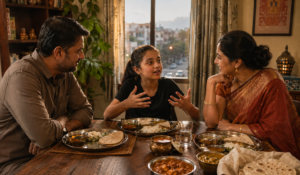
My 9-year-old recently had a school speech competition. I was thrilled — this was her chance to practice a skill I deeply value: the ability to think, speak, and communicate with confidence.
But when she proudly showed me her speech, I was appalled. She had asked ChatGPT to write it for her in less than two minutes.
I felt an odd pang — not because AI is “bad,” but because it had robbed her of a golden opportunity to stretch her imagination, struggle with words, and create something on her own.
I remembered my own school days in Lucknow, scribbling poems in the back of my notebook, struggling with rhyming words, and making sense of my world through words. That raw joy of discovery was the real learning. And here was my daughter, circumventing that same process with AI.
This incident was not just about one school speech. It was a reflection of a much bigger issue: in our AI-powered, shortcut-driven world, are our children losing the slow magic of imagination?
Concerned about her creative writing skills, I inquired her teacher on what is being done to develop creative writing for kids at school. Her teacher proudly showed “creative writing” examples- They were letter templates with no space for originality.
I was aghast at the lack of the required learning environment at school to develop kids’ creativity. When my daughter’s answers deviated from the standard text book answer, she was marked wrong — until I pushed back.
If this is happening in an elite Mumbai school, what about children in less-resourced classrooms?
It hit me: Our schools are killing creativity!
Today, I want to share with you why creative writing is not just “extra” but a core life skill for children aged 5–12, especially in India. More importantly, I’ll show you a practical, science-backed roadmap for building this skill at home — even if schools fail to do so.
🖋 What Is Creative Writing for Kids?
Creative writing is more than essays and grammar trainings. It’s the art form beyond traditional writing, an art of inventing characters, weaving stories, and imagining worlds that don’t exist yet.
According to Oxford Summer Courses, creative writing is original writing that expresses thoughts, ideas, and emotions, often through narrative, poetry, or drama.
Let’s understand creative writing through an example. Think of two examples on the same topic: Toy.
- Example 1 (Factual):
“Toys are things children play with. They can be blocks, dolls, cars. My favourite toy is my Barbie doll.” - Example 2 (Creative):
“My teddy has small black eyes that seem to follow me everywhere. At night, we fly across galaxies on his invisible magic spaceship, dodging meteors before bedtime.”
The second isn’t just about a toy. It’s about imagination at work. That’s what creative writing nurtures.
Any writing that uses imagination to create stories or narratives is creative writing. It may be a fiction or creative non-fiction, a poem or a drama, a review or a presentation.
In India, we actually have deep cultural roots in creative storytelling:
- Panchatantra and Jataka Tales taught morals through animal stories.
- Akbar-Birbal riddles used wit and imagination to solve problems.
- Folk riddles sparked both fun and thinking.
Our children deserve the same chance to imagine, play, and create.
🚀 AI Can Write Essays, But It Can’t Spark Your Child’s Imagination — Here’s Why That Matters
AI is here to stay. Tools like ChatGPT, Grammarly, and Midjourney are shaping how we think, write and design. But here’s the truth: AI works best when paired with human imagination. We cannot outsource creativity completely to such tools as it will steal the opportunity from our children to imagine, and think for themselves. They will become mere consumers, and not the creators they are meant to be!
Creative writing is a very crucial skill for laying foundation and supporting development of other significant skills in kids.
-
Critical Thinking Beyond Copy-Paste
AI can churn out words, but it cannot struggle, question, or wrestle with an idea like the human brain does. We need our kids to experience this. The act of wrestling with words forces kids to problem-solve, experiment, and make decisions — core to critical thinking.
🔬 Science Insight: Creativity activates the brain’s default mode network (daydreaming, imagination) alongside the executive control network (focus, decision-making). This rare co-activation strengthens higher-order thinking (Beaty et al., 2016, Nature Reviews Neuroscience).
When kids rely only on AI, they miss this “mental workout.”
-
Emotional Intelligence and Confidence
Writing stories teaches kids to articulate their feelings. Writing gives children a safe space to process feelings. Research shows expressive writing improves mood regulation, reduces anxiety, and builds self-esteem (Pennebaker & Smyth, 2016, Opening Up by Writing It Down).
While practicing creative writing, kids use their imagination to invent characters, sceneries and plots, making them embrace the art of storytelling. While imagining and enacting such stories, they develop self-expression. This leads to confidence.
- Brain Growth and Cognitive Flexibility
Creative writing isn’t just flashy words. It literally rewires the brain. MRI studies show writing tasks stimulate the prefrontal cortex — the hub for decision-making, focus, and planning (Kaufman & Gregoire, 2015, Wired to Create).
Studies link creative practice to better executive functioning in children (Diamond, 2013, Annual Review of Psychology).
-
Mental Health & Resilience
Storytelling helps children make sense of challenges. When kids put emotions into words, they process setbacks better. Neuroscience studies link creative activities with resilience and reduced stress markers in children (Bell & Parncutt, 2021, Frontiers in Psychology).
-
Communication Superpower for Life
Whether it’s a school debate, a future job pitch, or simply sharing feelings with a friend — storytelling is at the heart of effective communication.
Storytelling builds not just language but the confidence to stand up and share a perspective — a vital skill for future leaders.
Creative writing builds that foundation early.
-
Future Careers
The World Economic Forum lists creativity, problem-solving, and critical thinking among the top 5 skills for 2030. These are not optional extras — they’re survival tools.
👉 In India, where rote learning still dominates, children who can imagine, create, and communicate will stand out.
Pause & Reflect: When was the last time your child told you an original story?
Think Schools Will Teach It? 3 Myths Parents Must Stop Believing About Creative Writing
Schools alone cannot nurture creativity. In fact, many well-meaning schools unintentionally crush it by insisting on “model answers.”
Parents are often stuck with various myths around creative writing that they do not actively engage or support their kids in developing the critical skill of creative writing.
Let us quickly bust some myths and reinforce our, parents’ role in shaping our kid’s creativity, their future readiness.
- Myth 1: “My child is too young for creative writing.”
Reality: Even 5-year-olds can describe a toy or invent a talking dog story. We should encourage creative writing activities for kids as old as 5 years old through simple storytelling and drawing. - Myth 2: “First, grammar. Later, creativity.”
Reality: Creativity comes first; grammar can be polished later. Encourage your child to craft stories and laud them with praises. Gently correct the spelling or grammar mistakes in fun manner. - Myth 3: “My kid should first learn English to start Creative writing.”
Reality: Storytelling is universal. Kids can write in Hindi, Tamil, or even a mix of languages — the point is expression. Let them explore their creativity in whichever language they are comfortable with.
Our role as parents is simple but powerful: create an environment where imagination grows and stories flow as naturally as play.
🌱 Practical Prompts: How to Nurture Creativity at Home, starting today!
We often ask, “How to teach creative writing at home?”
Here are some easy, relatable, fun activities and prompts to get you started:
Fun creative writing prompts for kids
- Comic Strips → “Draw and write a comic on your summer vacation at Nani’s house.”
- “What If” Scenarios → “What if the sun never set?” “What if you could fly?”
- Autobiographies of Objects → “Write a day in the life of your shoes.”
- Story Dice → Roll dice and create a story with the corresponding pictures.
- Alternate Lines → Parent writes one line, child adds the next.
📌 Pro tip: Keep it playful. Kids thrive when imagination feels like a game, not homework.
Quick Try: Tonight, ask your child — ‘What if your Lunchbox could talk?’ and note their response.
🧩 Implementation Roadmap (Step-by-Step) for Parents
Here’s your ready-to-use, science-backed blueprint to build creative writing habits at home.
Phase 1: Spark Imagination (Ages 5–8)
🎯 Goal: Build comfort with free expression.
Activities:
- Daily 5-Minute Freewriting →
- Give your child a small diary (let them choose it for added fun)
- Ask them to write anything (even random words). No rules.
- Praise them for completing the activity.
- Picture Prompts →
- Show them a random image (Diwali fair, market scene, peacock in the jungle).
- Ask: “What story could this picture tell?” or “What is happening in this picture?”
- Prompt them and encourage them to keep going. For. E.g. If your child says “I don’t know,” model it. Say: “Okay, let me start: I see a man selling laddoos, but they are actually magic laddoos that make you fly!”
- If possible, ask them to write it down in their special “Story Journal”.
- Finish the Story →
- Start: “The bus stopped suddenly, and out came…”
- Let them complete it.
- What If Scenarios: “What if your school had no teachers for a day?”
📌 Parent Tip: Don’t correct grammar here. Celebrate imagination first.
Phase 2: Build Storytelling Foundations (Ages 8–10)
🎯 Goal: Introduce storytelling structure in fun, visual ways.
Activities:
- Story Mountain Worksheet (Beginning → Build-up → Problem → Resolution → Ending). Encourage your child to draft story using this framework.
- Character Cards → Make cards with Name and character traits (brave, shy, funny, Strengths/Weakness) and ask kids to pick two to create a story.
- Setting Map: Draw the story setting/ world together. Could be a cricket field, a jungle, candy land, or the Mumbai local train!
- Conflict Dice: Write problems on chits (e.g., “The treasure chest is locked,” “The bus breaks down”) and let kids pick one. Explore solutions together.
📌 Parent Tip: Start using graphic organizers/worksheets so kids see how stories flow.
(“Want a Story Mountain worksheet? 👉 Download free kit here”).
Phase 3: Strengthen Skills (Ages 10–12)
🎯 Goal: Teach craft + confidence in sharing.
Activities:
- Show, Don’t Tell → Instead of “She was scared,” nudge kids to write: “Her hands shook as the door creaked open.” or “Her knees trembled, and she hid behind the curtain.”
- Revision Rounds → Teach first draft = ideas, second draft = polish. Encourage them to write drafts and editing it to make it better.
- Alternate Endings: Let them imagine and rewrite their favourite movies with new endings.
- Collaborative Stories: Each family member writes one sentence, building a crazy story together.
📌 Parent Tip: Recognition builds confidence. Celebrate effort, not perfection.
Phase 4: Advanced Expression (Optional, Ages 11–12)
🎯 Goal: Prepare for independent, reflective writing.
Activities:
- Diary Dialogues → Encourage kids to write letters to themselves (“Dear Future Me”).
- Opinion Pieces → Ask: “Do you think kids should have homework? Why/why not?”
- Mini-Plays → Write short dialogues and perform them as skits at home.
Phase 5: Celebrate & Share
- Compile their stories and get it printed into a “Family Storybook.”
- Host a “Family Story Night” where everyone reads aloud.
- Record stories as audio messages and share with grandparents.
👉 Pro Tip: Celebrate effort, not polish. Say: “I love how funny your character was” rather than “Good handwriting.”
🧠 The Science of Why This Works
- Imagination strengthens empathy. Neuroscience shows reading and creating stories activates the brain’s mirror neuron system, which helps kids understand others’ feelings (Immordino-Yang, 2009).
- Creativity reduces stress. Studies on school children engaging in storytelling showed lower cortisol and improved mood regulation (Bell, 2021).
- Writing builds working memory. Studies link creative composition with stronger working memory and attention spans in middle schoolers (Kellogg, 2008).
- Narrative identity development. Psychology research shows storytelling helps children build a sense of self and purpose (McAdams, 2013).
Free Download: The Creative Writing Starter Kit 🎁
To help you start today, we have designed a downloadable worksheet pack (free for parents). Inside you’ll find:
- Story Mountain Template → Visual chart for planning stories.
- Character Map → Space to draw/write character traits, goals, quirks.
- Emotion Wheel → Helps kids expand emotional vocabulary (happy vs. thrilled, sad vs. heartbroken).
- Show, Don’t Tell Prompts → Ready examples kids can practice with.
- Daily 5-Minute Freewriting Tracker → A printable with 30 playful prompts (e.g., “If my lunchbox could talk…”).
👉 Download the free Creative Writing Starter Kit now — and turn your child’s “boring essays” into sparkling stories that boost brainpower and confidence.
🎭 Our Role as Parents
Creative writing is not about perfect grammar. It’s about giving children a voice in a noisy, fast-paced, AI-driven world. It’s about giving kids courage to put their wildest thoughts into words and unleash their creativity.
When we:
- Encourage curiosity,
- Validate their wild ideas,
- Create a safe space for failure,
…we’re not just raising better writers but better thinkers, innovators, and leaders. We’re raising future-ready kids.
📣 Final Word
AI can write essays in seconds. But it cannot give your child their own voice.
Your child’s imagination is still their greatest superpower. Give them the gift of imagination – flying cars, magical castles, and talking animals!
Creative writing builds not just strong academics, but resilient, empathetic, future-ready kids.
So tonight, ask your child: “What if your pillow could talk?”
And watch the magic unfold.
✅ Call to Action
🌟 Ready to help your child unlock their creative potential?
👉 Download our free “Creative Writing Starter Kit” — fun, printable tools to build skills beyond textbooks.
Because future-ready kids aren’t born — they’re nurtured.
👉 “This blog is part of our Future-Ready Kids program at GrowWise. Parents who join see not just stronger writing, but happier, more confident kids.”
❓ FAQs on Creative Writing for Kids
-
At what age should I start teaching creative writing?
Children as young as 5–6 years can begin with playful story prompts, picture-based writing, and oral storytelling. By 8–9 years, kids can handle structured story maps, and by 10–12 years, they’re ready for more advanced techniques like “show, don’t tell” and opinion pieces.
-
My child hates writing. How do I spark interest?
Start small and keep it fun. Use drawing + writing combos (e.g., draw a character, then write a sentence about them). Comic strips, riddles, and story dice are fantastic ice-breakers. Always praise creativity over neatness or grammar in the early stages, keeping it fun and simple.
-
Isn’t AI making creative writing less relevant?
On the contrary, today creative writing is more crucial than ever! AI can generate answers, but it cannot create your child’s voice, emotions, or imagination. In fact, as AI handles and automates routine tasks, human creativity will be the ultimate differentiator in education and careers.
-
How often should my child practice creative writing?
Aim for 10–15 minutes, 3–4 times a week. Short, regular practice builds the habit without overwhelming them. Use freewriting journals or a “story jar” with prompts for consistency.
-
Does creative writing really improve academics?
Yes. Research shows students with stronger writing and storytelling skills perform better in reading comprehension, problem-solving, and even STEM subjects. Creative writing sharpens focus, builds vocabulary, and fosters critical thinking — skills that spill over into all subjects.
-
What if my child struggles with spelling and grammar?
That’s perfectly normal. In early stages, focus on ideas first, process later. Encourage storytelling without sharp corrections. Once the habit is formed, gently introduce editing rounds (e.g., “let’s check if we can make this sentence even stronger”).
-
How do I fit creative writing into our busy schedule?
Integrate it into daily life:
- Car rides → “Let’s make up a story about the car behind us.”
- Bedtime → “Tell me a new ending for tonight’s story.”
- Dinner → “If this roti could talk, what would it say?”
No need for long sessions — bite-sized imagination sparks work wonders.
-
Can creative writing support emotional wellbeing?
Absolutely. Storytelling helps children process emotions, build empathy, and reduce anxiety. For example, writing “a diary from the perspective of my angry backpack” lets kids express and manage big feelings safely.